
Del 4 i serien Inscriptions
Trust in the System
Research Ethics Committees and the Regulation of Biomedical Research
Inbunden, Engelska, 2020
1 609 kr
Beställningsvara. Skickas inom 5-8 vardagar. Fri frakt för medlemmar vid köp för minst 249 kr.
Finns i fler format (1)
Every month, groups of people from all over the United Kingdom decide what kind of research should be carried out on patients within the NHS. These groups – Research Ethics Committees (RECs) – made up of doctors, nurses, researchers, and members of the general public – help shape the future of medicine, and play a crucial role in the regulation of a wide range of research from social science to epidemiology, vaccine and drugs trials to surgery. Based on extensive observations, interviews, and archival research, this book provides an in-depth insight into RECs, one of the most crucial forms of regulation around medical research. In providing one of the first empirical examinations of this kind of regulation, this book challenges the impersonal, de-socialised, and mechanical models of REC decision-making.
Produktinformation
- Utgivningsdatum2020-12-10
- Mått138 x 216 x 16 mm
- Vikt435 g
- FormatInbunden
- SpråkEngelska
- SerieInscriptions
- Antal sidor224
- FörlagManchester University Press
- ISBN9781526152916
Tillhör följande kategorier
Hoppa över listan







Mer från samma serie
Del 3
Del 2
Del 1
Personalised Cancer Medicine
Anne Kerr, Choon Key Chekar, Emily Ross, Julia Swallow, Sarah Cunningham-Burley
Inbunden, 2021
579 kr
Del 3
Del 5
Elephant and the Dragon in Contemporary Life Sciences
Joy Y. Zhang, Saheli Datta Burton
Inbunden, 2022
1 559 kr
Del 7
Researching Animal Research
Gail Davies, Beth Greenhough, Pru Hobson-West, Robert G. W. Kirk, Alexandra Palmer, Emma Roe
Inbunden, 2024
559 kr
Del 8
Del 9
Del 5
Elephant and the Dragon in Contemporary Life Sciences
Joy Y. Zhang, Saheli Datta Burton
Häftad, 2024
459 kr
Del 10
Hoppa över listan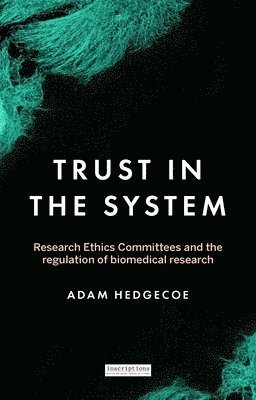

Du kanske också är intresserad av
Del 4
Del 5
Elephant and the Dragon in Contemporary Life Sciences
Joy Y. Zhang, Saheli Datta Burton
Inbunden, 2022
1 559 kr
Del 9
Del 10
- Nyhet
Del 3
Del 2
Del 3
Del 8