
Transformative Management Education
The Role of the Humanities and Social Sciences
Inbunden, Engelska, 2018
3 129 kr
Beställningsvara. Skickas inom 10-15 vardagar. Fri frakt för medlemmar vid köp för minst 249 kr.
Finns i fler format (1)
Due to the recent global financial crises, academic business schools have come in for much criticism, having, in the eyes of the public, failed in their responsibility to society by teaching future managers only how to increase their personal gain without any consideration as to their actions’ social and cultural consequences. Realising that there is a pressing need to innovate their educational offers accordingly, business schools are beginning to turn to the humanities and social sciences to improve on the understanding and thus the teaching of management. This book is the result of an empirical study conducted at eight academic business schools that either already practise or are beginning to practise linking management education to the humanities and social sciences. Gathered mostly in interviews our research team conducted during site visits to these schools, the material presented shows three major fields of concern: how to shift the focus from instrumental to transformative learning, how to reframe the concept of disciplinary subject matter towards a more relational understanding of knowledge—especially in the light of the impact digitalisation is having on education—and how to address the organisational, as well as the political consequences of management education turning towards the inclusion of the humanities and social sciences strategically. The findings indicate that the humanities and social sciences indeed offer knowledge which can significantly help management education with meeting the challenges of the twenty-first century. Innovating management education by making it part of its program portfolios proves a challenge in and of itself in the face of a university system which still determinedly clings to disciplinary segregation. Reforming management education towards an engagement with fields of knowledge traditionally at best ignored and at worst vilified as being completely useless in the "real world" may therefore place academic business schools at the forefront of a movement that is beginning to reshape the educational landscape as a whole. This book will be of value to researchers, academics and students in the fields of business, management studies, organisational studies and education studies.
Produktinformation
- Utgivningsdatum2018-12-13
- Mått152 x 229 x 15 mm
- Vikt399 g
- FormatInbunden
- SpråkEngelska
- SerieRoutledge Advances in Management and Business Studies
- Antal sidor186
- FörlagTaylor & Francis Ltd
- ISBN9780367076733
Tillhör följande kategorier
Hoppa över listan

Mer från samma författare
Del 5
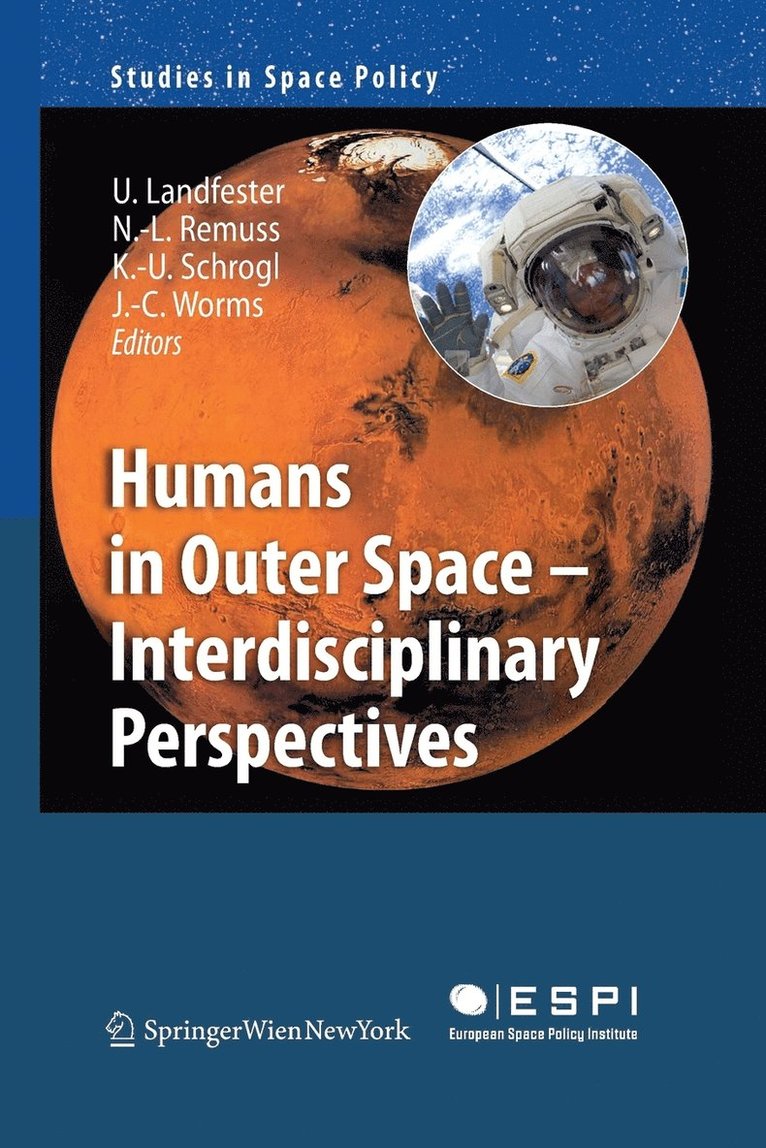
Humans in Outer Space - Interdisciplinary Perspectives
Ulrike Landfester, Nina-Louisa Remuss, Kai-Uwe Schrogl, Jean-Claude Worms
Inbunden, 2010
1 439 kr
Del 5
Humans in Outer Space - Interdisciplinary Perspectives
Ulrike Landfester, Nina-Louisa Remuss, Kai-Uwe Schrogl, Jean-Claude Worms
Häftad, 2016
1 439 kr
Hoppa över listan







Mer från samma serie
Gender Equality in a Global Perspective
Anders Ortenblad, Raili Marling, Snjezana Vasiljevic
Häftad, 2018
959 kr
Frugal Innovation and the New Product Development Process
Stephanie B.M. Cadeddu, Jerome D. Donovan, Cheree Topple, Gerrit A. de Waal, Eryadi K. Masli
Inbunden, 2019
3 309 kr
Consumer Financial Vulnerabilities in Malaysia
Nurul Shahnaz Ahmad Mahdzan, Mohd Edil Abd Sukor, Izlin Ismail, Mahfuzur Rahman
Inbunden, 2020
3 619 kr
Developing the Workforce in an Emerging Economy
Kantha Dayaram, Linda Lambey, John Burgess, Tri Wulida Afrianty
Inbunden, 2020
3 309 kr
Strategies, Leadership and Complexity in Crisis and Emergency Operations
Stig Johannessen
Häftad, 2019
989 kr
Green Human Resource Management in Chinese Enterprises
Jie Shen, Jenny Dumont, Xin Deng
Inbunden, 2019
3 219 kr
Hoppa över listan




Du kanske också är intresserad av
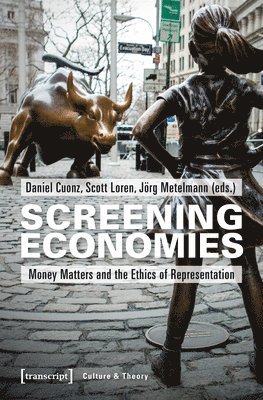
Screening Economies – Money Matters and the Ethics of Representation
Daniel Cuonz, Scott Loren, Jörg Metelmann, Daniel Cuonz, Scott Loren
Häftad, 2021
409 kr
Del 46
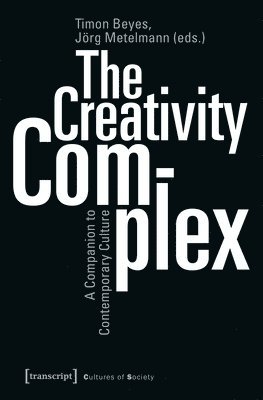
Creativity Complex – A Companion to Contemporary Culture
Timon Beyes, Jörg Metelmann, Timon Beyes, Jörg Metelmann
Häftad, 2021
479 kr
Del 5
Humans in Outer Space - Interdisciplinary Perspectives
Ulrike Landfester, Nina-Louisa Remuss, Kai-Uwe Schrogl, Jean-Claude Worms
Häftad, 2016
1 439 kr
Del 5
Humans in Outer Space - Interdisciplinary Perspectives
Ulrike Landfester, Nina-Louisa Remuss, Kai-Uwe Schrogl, Jean-Claude Worms
Inbunden, 2010
1 439 kr
- Nyhet
Del 3
- Nyhet
Del 11