
Towards Monetary and Financial Integration in East Asia
Inbunden, Engelska, 2009
3 379 kr
Beställningsvara. Skickas inom 5-8 vardagar. Fri frakt för medlemmar vid köp för minst 249 kr.
This indispensable book provides a comprehensive analysis of monetary and financial integration in East Asia. It assesses the steps already taken toward financial integration and brings forward different proposals for future exchange rate arrangements in what has now become the world's most dynamic region.With contributions from distinguished experts this timely book evaluates the economic and politico-economic arguments and conditions for monetary and financial integration in East Asia. It explores how and to what extent the countries of the region can integrate despite their heterogeneity and their underlying political tensions. Drawing on the European experiences, this book analyzes the economic logic of monetary and financial integration in East Asia and its political feasibility.This invaluable broad analysis will be of interest to academic researchers, students, policy-makers and professional economists working on matters of international economic cooperation, common currency areas, international open economy macroeconomics, and East Asian integration.
Produktinformation
- Utgivningsdatum2009-04-30
- Mått156 x 234 x undefined mm
- FormatInbunden
- SpråkEngelska
- FörlagEdward Elgar Publishing Ltd
- ISBN9781848443631
Tillhör följande kategorier
Hoppa över listan



Du kanske också är intresserad av
Routledge Handbook of Banking and Finance in Asia
Ulrich Volz, Peter Morgan, Naoyuki Yoshino
Inbunden, 2018
4 999 kr
Routledge Handbook of Banking and Finance in Asia
Ulrich Volz, Peter Morgan, Naoyuki Yoshino
Häftad, 2020
989 kr
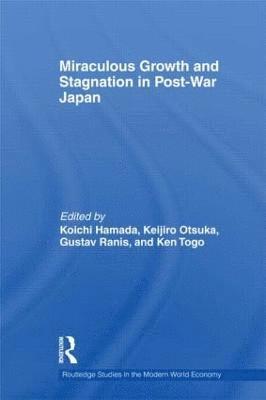
Miraculous Growth and Stagnation in Post-War Japan
Koichi Hamada, Keijiro Otsuka, Gustav Ranis, Ken Togo
Inbunden, 2011
3 309 kr
Miraculous Growth and Stagnation in Post-War Japan
Koichi Hamada, Keijiro Otsuka, Gustav Ranis, Ken Togo
Häftad, 2013
989 kr
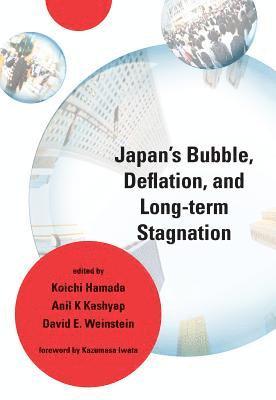
Japan's Bubble, Deflation, and Long-term Stagnation
Koichi Hamada, Anil K Kashyap, David E. Weinstein
Inbunden, 2010
249 kr
Japan's Bubble, Deflation, and Long-term Stagnation
Koichi Hamada, Anil K Kashyap, David E. Weinstein
Häftad, 2025
929 kr