
Tort Liability and Autonomous Systems Accidents
Common and Civil Law Perspectives
Inbunden, Engelska, 2023
2 319 kr
Beställningsvara. Skickas inom 5-8 vardagar. Fri frakt för medlemmar vid köp för minst 249 kr.
Autonomous systems driven by artificial intelligence (AI) technologies have significant potential for increased productivity and improved safety in many sectors, but it is inevitable that some accidents will occur. The law needs an adequate way to respond to these scenarios and compensate those wrongfully injured. This comprehensive book examines the unique difficulties that autonomous systems create for existing accident compensation systems founded on tort, and proposes solutions.Its chapters question the adequacy of accident compensation systems designed around the human wrongdoer, or a human whose conduct can be attributed to a legal person, when the 'wrongdoer' is an autonomous system. With a multi-jurisdictional approach, including both common and civil law perspectives, this book examines the many challenges that autonomous systems present in tort law and sets forth that tort lawyers will need to significantly adjust their thinking to face these challenges. Focus is given to proposals and developments at an EU level and finding solutions to the problems brought about by autonomous systems.This insightful text will be of great value to both students, researchers and practitioners in tort law, accident compensation and AI. High tech companies, think tanks, consultancies and organisations interested in autonomous systems and accidents will also widely benefit from its expertise.
Produktinformation
- Utgivningsdatum2023-10-13
- Mått156 x 234 x undefined mm
- FormatInbunden
- SpråkEngelska
- FörlagEdward Elgar Publishing Ltd
- ISBN9781802203837
Tillhör följande kategorier
Hoppa över listan
Mer från samma författare
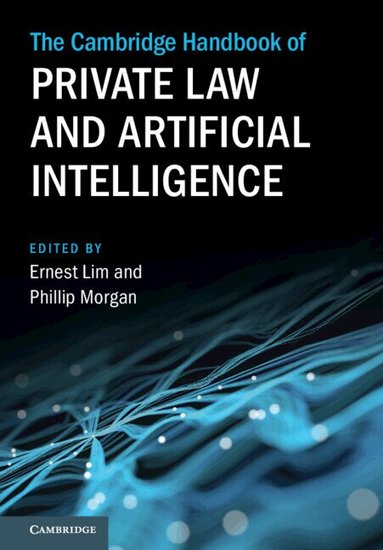
The Cambridge Handbook of Private Law and Artificial Intelligence
Ernest Lim, Phillip Morgan
Inbunden, 2024
3 029 kr
Hoppa över listan




Du kanske också är intresserad av
The Cambridge Handbook of Private Law and Artificial Intelligence
Ernest Lim, Phillip Morgan
Inbunden, 2024
3 029 kr
- Nyhet
Del 6
- Nyhet
Del 3
- Nyhet
Del 4
- Nyhet
Del 7
- Nyhet
- Nyhet
Del 11
- Nyhet