
Thinking Historically
A Guide to Statecraft and Strategy
Inbunden, Engelska, 2026
569 kr
Tillfälligt slut
A compelling and insightful argument for historical study as a way to understand and navigate the complex, often confusing world of decision-makingWinner, 2026 Lionel Gelber Prize“Gavin’s writing is nuanced and compelling. It’s also fun. . . . Churchill would have loved Gavin’s book and would have encouraged aspiring statespeople to study it carefully.”—John T. Shaw, Chicago TribuneIt seems obvious that we should use history to improve policy. If we have a good understanding of the past, it should enable better decisions in the present, especially in the extraordinarily consequential worlds of statecraft and strategy. But how do we gain that knowledge? How should history be used? Sadly, it is rarely done well, and historians and decision-makers seldom interact. But in this remarkable book, Francis J. Gavin explains the many ways historical knowledge can help us understand and navigate the complex, often confusing world around us.Good historical work convincingly captures the challenges and complexities the decision-maker faces. At its most useful, history is less a narrowly defined field of study than a practice, a mental awareness, a discernment, and a responsiveness to the past and how it unfolded into our present world—a discipline in the best sense of the word. Gavin demonstrates how a historical sensibility helps us to appreciate the unexpected; complicates our assumptions; makes the unfamiliar familiar and the familiar unfamiliar; and requires us, without entirely suspending moral judgment, to try to understand others on their own terms. This book is a powerful argument for thinking historically as a way for readers to apply wisdom in encountering what is foreign to them.
Produktinformation
- Utgivningsdatum2026-01-06
- Mått200 x 20 x 140 mm
- Vikt430 g
- FormatInbunden
- SpråkEngelska
- Antal sidor256
- FörlagYale University Press
- ISBN9780300278361
Tillhör följande kategorier
Hoppa över listan



Mer från samma författare
Marknaden : kapital, stater och tankar om en fri värld
David Abulafia, Ali Ansari, Richard Bratby, Mary Bridges, Caroline Burt, David Butterfield, Edward Chancellor, Marie Kawthar Daouda, Eloise Davies, Ulrike Franke, Francis J. Gavin, Magnus Henrekson, William Inboden, Shashank Joshi, Knut N. Kjaer, Kwasi Kwarteng, Charlie Laderman, Ian Leslie, Nicklas Berild Lundblad, Iain Martin, Jade McGlynn, Mario Pisani, Alina Polyakova, Sergey Radchenko, Mick Ryan, Paul Tucker, Rikard Westerberg, Adrian Wooldridge, David Wootton, Linda Yueh
Inbunden, 2026
299 kr
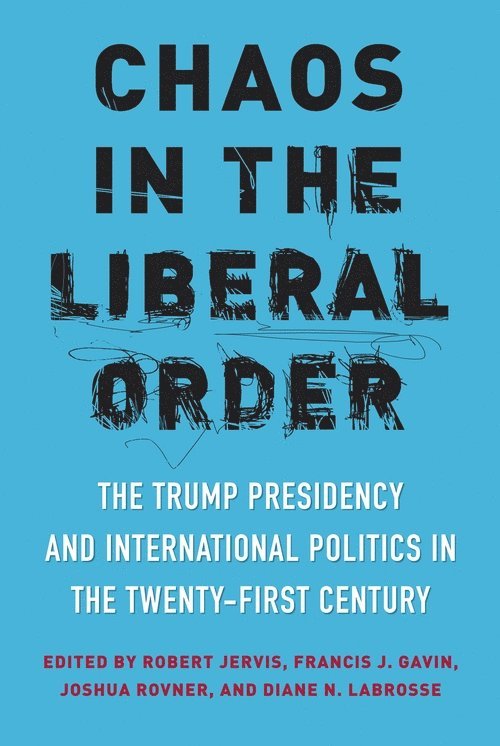
Chaos in the Liberal Order
Robert Jervis, Francis J. Gavin, Joshua Rovner, Diane N. Labrosse
Inbunden, 2018
3 169 kr
Chaos in the Liberal Order
Robert Jervis, Francis J. Gavin, Joshua Rovner, Diane N. Labrosse
Häftad, 2018
449 kr
Hoppa över listan


Du kanske också är intresserad av
Chaos in the Liberal Order
Robert Jervis, Francis J. Gavin, Joshua Rovner, Diane N. Labrosse
Inbunden, 2018
3 169 kr
The market : money, states and ideas for a free world
Linda Yueh, David Wootton, Adrian Wooldridge, Rikard Westerberg, Paul Tucker, Mick Ryan, Sergey Radchenko, Alina Polyakova, Mario Pisani, Jade McGlynn, Iain Martin, Nicklas Berild Lundblad, Ian Leslie, Charlie Laderman, Kwasi Kwarteng, Knut N. Kjaer, Shashank Joshi, William Inboden, Magnus Henrekson, Francis J. Gavin, Ulrike Franke, Eloise Davies, Marie Kawthar Daouda, Edward Chancellor, David Butterfield, Caroline Burt, Mary Bridges, Richard Bratby, Ali Ansari, David Abulafia, Francis J Gavin
Inbunden, 2025
299 kr
Wonder and Worry : contemporary history in an age of uncertainty
Francis J. Gavin
Inbunden, 2025
329 kr