
Theory of neural information processing systems
Inbunden, Engelska, 2005
2 009 kr
Beställningsvara. Skickas inom 5-8 vardagar. Fri frakt för medlemmar vid köp för minst 249 kr.
Finns i fler format (1)
Theory of Neural Information Processing Systems provides an explicit, coherent, and up-to-date account of the modern theory of neural information processing systems. It has been carefully developed for graduate students from any quantitative dsicipline, including mathematics, computer science, physics, engineering or biology, and has been thoroughly class-tested by the authors over a period of some 8 years. Exercises are presented throughout the text and notes on historical background and further reading guide the student into the literature. All mathematical details are included and appendices provide further background material, including probability theory, linear algebra and stochastic processes, making this textbook accessible to a wide audience.
Produktinformation
- Utgivningsdatum2005-07-28
- Mått179 x 254 x 37 mm
- Vikt1 173 g
- FormatInbunden
- SpråkEngelska
- Antal sidor586
- FörlagOUP OXFORD
- ISBN9780198530237
Tillhör följande kategorier
Hoppa över listan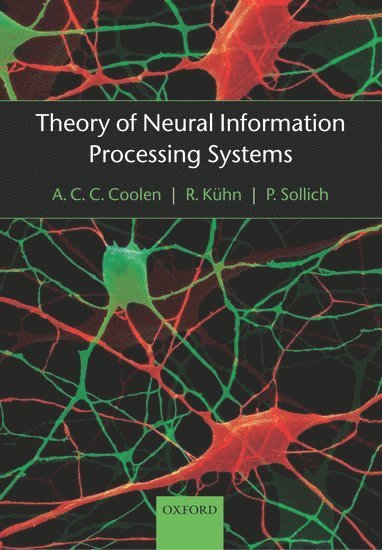






Du kanske också är intresserad av
Theory of Neural Information Processing Systems
A.C.C. Coolen, R. Kuehn, P. Sollich
Häftad, 2005
1 859 kr
- Nyhet
Del 3
- Nyhet
Del 11
Del 1
- Nyhet
Del 4
- Nyhet
Del 6
Del 3
Del 2