
Del i serien Kierkegaard Studies. Monograph Series
Theory and Practice in Kant and Kierkegaard
Inbunden, Engelska, 2004
1 929 kr
Beställningsvara. Skickas inom 5-8 vardagar. Fri frakt för medlemmar vid köp för minst 249 kr.
This work investigates crucial aspects of Kant's epistemology and ethics in relation to Kierkegaard's thinking. The challenge is taken up of developing a systematic reconstruction of Kant's and Kierkegaard's position. Kant forms a matrix for the interpretation of Kierkegaard, and considerable space is devoted to the exposition of Kant at those various points at which contact with Kierkegaard's thought is to be demonstrated. The burden of the argument is that Kierkegaard in his account of the stages is much closer to Kant than the texts initially reveal. It is possible, then, to arrive at a proper grasp of Kierkegaard's final position by seeing just how radically the stage of Christian faith (Religiousness B) departs from Kant.
Produktinformation
- Utgivningsdatum2004-04-26
- Mått155 x 230 x 14 mm
- Vikt365 g
- FormatInbunden
- SpråkEngelska
- SerieKierkegaard Studies. Monograph Series
- Antal sidor162
- Upplaga4001
- FörlagDe Gruyter
- ISBN9783110177893
Tillhör följande kategorier
Hoppa över listan



Mer från samma serie
Del 1
Del 6
Del 7
Del 12
Del 11
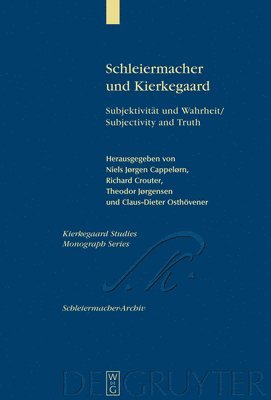
Schleiermacher und Kierkegaard
Niels Jørgen Cappelørn, Richard E. Crouter, Theodor Jørgensen, Claus-Dieter Osthövener
Inbunden, 2006
4 519 kr
Del 14
Del 13
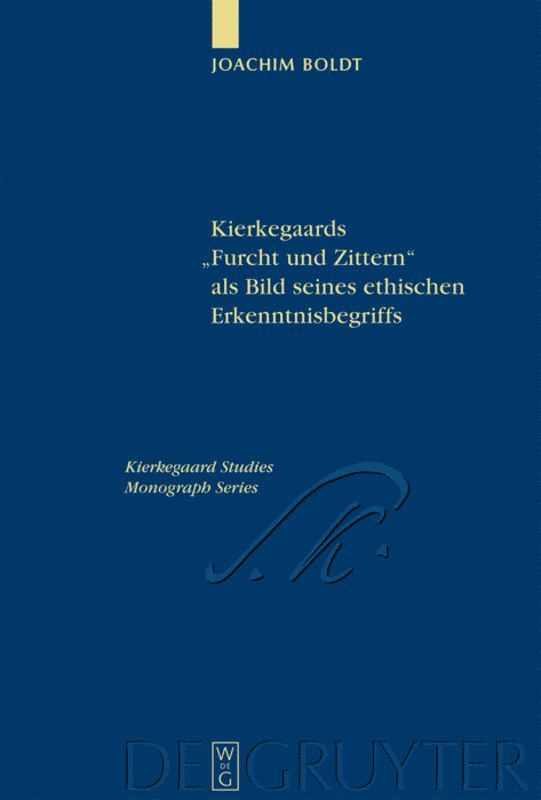
Kierkegaards "Furcht und Zittern" als Bild seines ethischen Erkenntnisbegriffs
Joachim Boldt
Inbunden, 2006
2 949 kr
Hoppa över listan



Du kanske också är intresserad av
Del 23
- Nyhet
Del 3
›Grundlinien zum Systeme der Aesthetik‹ (1824) und andere kunstphilosophische Schriften
Johan Ludvig Heiberg, Klaus Müller-Wille
Inbunden, 2022
2 779 kr