
Theology against Religion
Constructive Dialogues with Bonhoeffer and Barth
Häftad, Engelska, 2011
659 kr
Beställningsvara. Skickas inom 10-15 vardagar. Fri frakt för medlemmar vid köp för minst 249 kr.
Finns i fler format (1)
This title gives a constructive approach from a theological perspective about the category of religion in Dietrich Bonhoeffer and Karl Barth. What does it mean to speak of Christianity as a religion? What are the implications of this to relations with secular bodies? If Christianity is identified as a 'religion', how does it relate to other similar human phenomena with which it might loosely be grouped? How should these others be understood in relation to Christianity from the perspective of a Christian theology of religion (as a prior engagement before a theology of the religions)? What makes, for example, Hinduism, Judaism and Islam theologically distinctive as entities from other communities or organizations such as trade unions, political parties or large non-governmental organizations? How should Christianity relate to a complexly pluralistic, religious and secular world? This book considers the question of how to understand religion theologically. The category of 'religion' is one which continues to be used politically and generally, and this book seeks to consider this category theologically, rather than sociologically, ethnographically, philosophically or anthropologically.In order to answer these questions, this book draws constructively on Bonhoeffer and Barth's theologies of religion/religionlessness.
Produktinformation
- Utgivningsdatum2011-10-27
- Mått150 x 232 x 16 mm
- Vikt446 g
- FormatHäftad
- SpråkEngelska
- Antal sidor256
- FörlagBloomsbury Publishing PLC
- ISBN9780567104236
Tillhör följande kategorier
Hoppa över listan




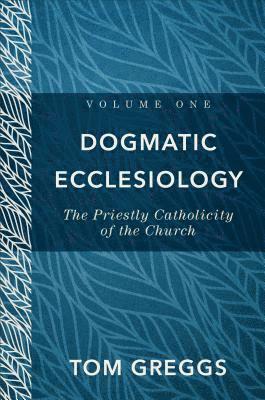
Mer från samma författare
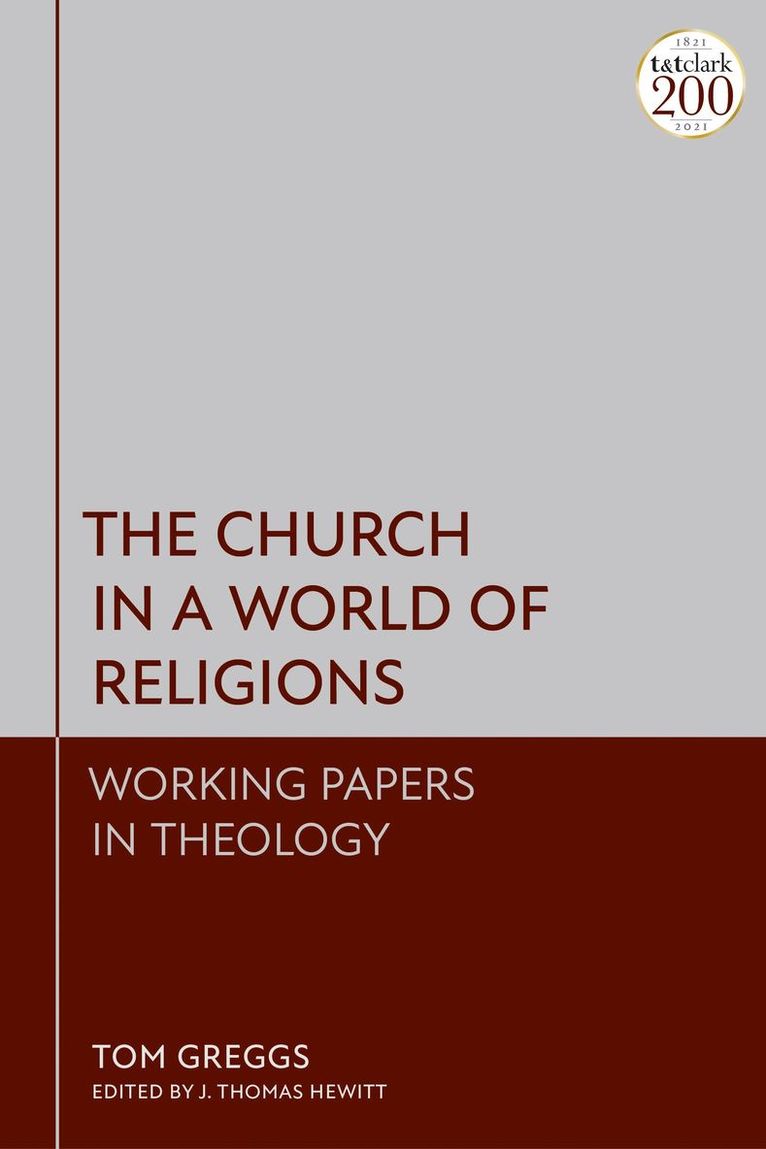
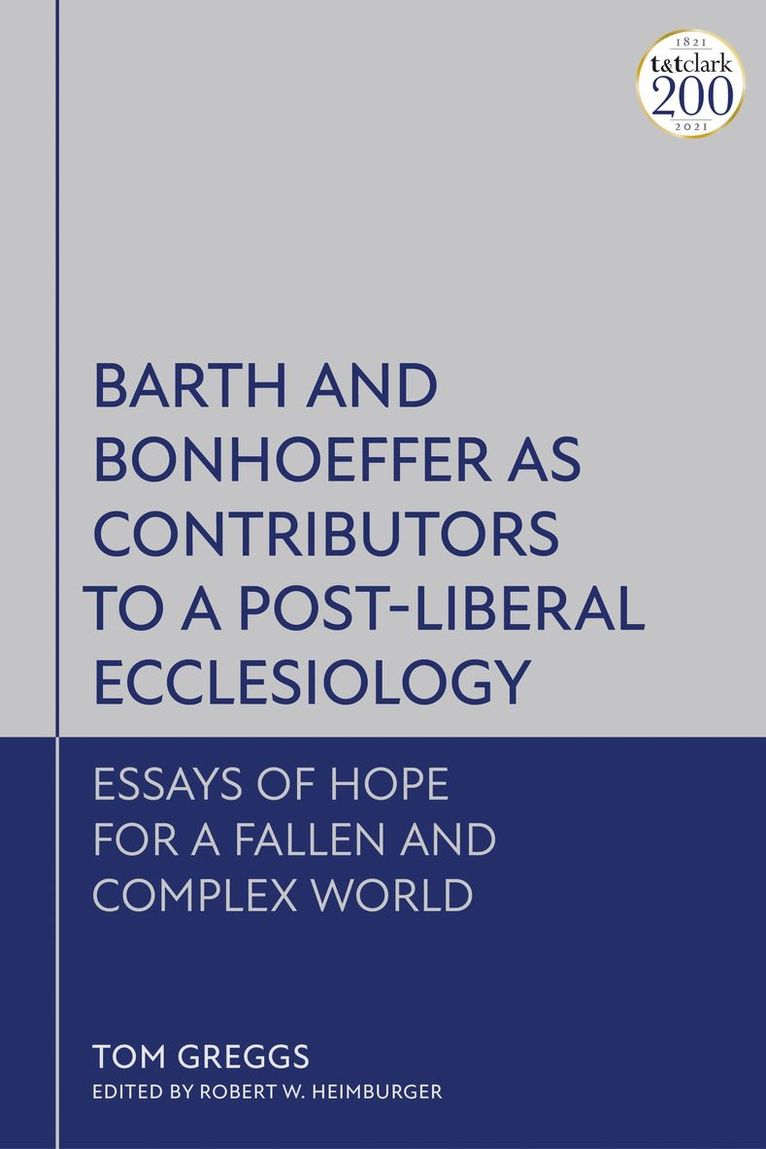
Barth and Bonhoeffer as Contributors to a Post-Liberal Ecclesiology
Tom Greggs, Robert W. Heimburger
Inbunden, 2021
1 719 kr
Barth and Bonhoeffer as Contributors to a Post-Liberal Ecclesiology
Tom Greggs, Robert W. Heimburger
Häftad, 2023
549 kr
Hoppa över listan


Du kanske också är intresserad av
Barth and Bonhoeffer as Contributors to a Post-Liberal Ecclesiology
Tom Greggs, Robert W. Heimburger
Inbunden, 2021
1 719 kr