
The Textual Tradition of Euripides' Orestes
Inbunden, Engelska, 1991
3 979 kr
Beställningsvara. Skickas inom 5-8 vardagar. Fri frakt för medlemmar vid köp för minst 249 kr.
Orestes, produced in 408 BC towards the end of Euripides' life, was one of the most popular Greek tragedies in antiquity, and was consequently preserved in a large number of medieval manuscripts. Having investigated about sixty of the most important, James Diggle explains the complicated relationships which exist among them. He also examines afresh the contribution of the papyri and quotations which preserve parts of the play. In the course of these analyses he throws much light on problems of text and interpretation, on metre, and on the activities of Byzantine scholars.This examination of Orestes is the last major task in the completion of the study of the Euripidean manuscript tradition. As such it will be indispensable to all students of the transmission of Greek tragedy.
Produktinformation
- Utgivningsdatum1991-07-25
- Mått146 x 223 x 17 mm
- Vikt379 g
- FormatInbunden
- SpråkEngelska
- Antal sidor196
- FörlagClarendon Press
- ISBN9780198147664
Tillhör följande kategorier
Hoppa över listan

Mer från samma författare
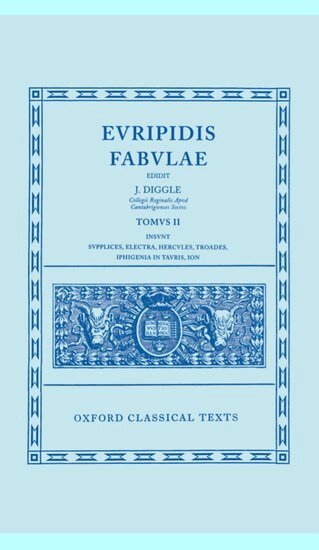
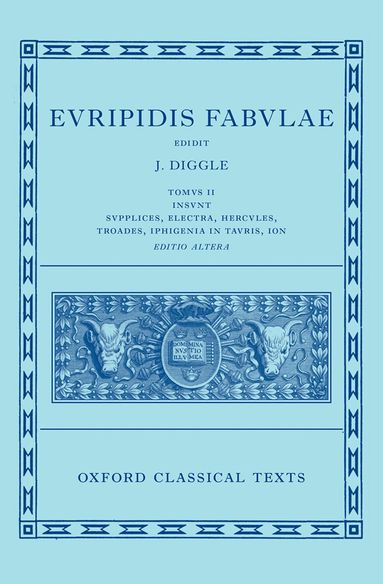
Euripides: Fabulae Vol. II (Euripidis Fabulae Tomus II, Supplices, Electra, Hercules, Troades, Iphigenia in Tauris, Ion)
James Diggle
Inbunden, 2025
1 019 kr
Del 43
Hoppa över listan
Du kanske också är intresserad av
Del 12
Euripides: Fabulae Vol. II (Euripidis Fabulae Tomus II, Supplices, Electra, Hercules, Troades, Iphigenia in Tauris, Ion)
James Diggle
Inbunden, 2025
1 019 kr
Del 43