
Del i serien Cambridge Military Histories
The Resurrection and Collapse of Empire in Habsburg Serbia, 1914-1918: Volume 1
Häftad, Engelska, 2014
749 kr
Beställningsvara. Skickas inom 5-8 vardagar. Fri frakt för medlemmar vid köp för minst 249 kr.
Finns i fler format (1)
This book examines the Habsburg Army's occupation of Serbia from 1914 through 1918. This occupation ran along a distinctly European-centered trajectory radically different from other great power colonial projects or occupations during the 20th century. Unlike these projects and occupations, the Habsburg Army sought to denationalize and depoliticize Serbia, to gradually reduce the occupation's violence, and to fully integrate the country into the Empire. These aims stemmed from 19th-century conservative and monarchical convictions that compelled the Army to operate under broad legal and civilizational constraints. Gumz's research provides a counterpoint to interpretations of the First World War that emphasize the centrality of racially inflected, Darwinist worldviews in the war.
Produktinformation
- Utgivningsdatum2014-02-27
- Mått152 x 229 x 17 mm
- Vikt430 g
- FormatHäftad
- SpråkEngelska
- SerieCambridge Military Histories
- Antal sidor288
- FörlagCambridge University Press
- ISBN9781107689725
Tillhör följande kategorier
Hoppa över listan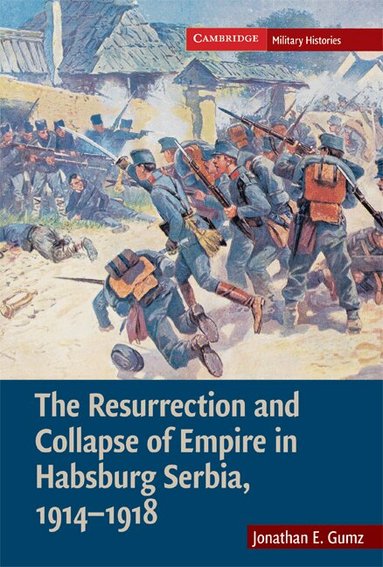








Du kanske också är intresserad av
The Resurrection and Collapse of Empire in Habsburg Serbia, 1914-1918: Volume 1
Jonathan E. Gumz
Inbunden, 2009
2 129 kr
- Nyhet
Del 3
- Nyhet
Del 7
- Nyhet
- Nyhet
Del 6
- Nyhet
Del 4
- Nyhet
Del 11