
The Price of German Unity
Reunification and the Crisis of the Welfare State
Inbunden, Engelska, 2011
2 779 kr
Beställningsvara. Skickas inom 5-8 vardagar. Fri frakt för medlemmar vid köp för minst 249 kr.
The unification of Germany as a prelude to the end of the division of Europe and the termination of the Cold War came as a surprise to the whole world. It was the beginning of a new era in German and European history. The Price of German Unity is the first full-scale analysis of this process, both domestically and in its wider international context, with a particular focus on the social-policy consequences. Gerhard A. Ritter uses a wide range of hitherto inaccessible sources to describe and analyse the dynamics of reunification, including archives from the Chancellor's Office, and the relevant ministries and major parties of both the Federal Republic and the GDR, as well as private papers of leading actors on both sides and a wealth of interview material. As the book convincingly demonstrates, the wholesale transfer of the social system of the Federal Republic of Germany to the territory of the former GDR and the huge drain of economic resources from West to East that this involved, profoundly affected the economic and political framework of the new Germany and greatly intensified the latent crisis of the German welfare state.
Produktinformation
- Utgivningsdatum2011-05-05
- Mått168 x 241 x 36 mm
- Vikt926 g
- FormatInbunden
- SpråkEngelska
- Antal sidor500
- FörlagOUP OXFORD
- ISBN9780199556823
- ÖversättareRichard Deveson
Tillhör följande kategorier
Hoppa över listan








Mer från samma författare
Del 2
Die Erfahrung der Inflation im internationalen Zusammenhang und Vergleich / The Experience of Inflation International and Comparative Studies
Gerald D. Feldman, Carl-Ludwig Holtfrerich, Gerhard A. Ritter, Peter-Christian Witt
Inbunden, 1984
2 729 kr
Del 8
Die Anpassung an die Inflation / The Adaptation to Inflation
Gerald D. Feldman, Carl-Ludwig Holtfrerich, Gerhard A. Ritter, Peter-Christian Witt
Inbunden, 1986
2 929 kr
Entstehung des Historismus
Friedrich Meinecke, Hans Herzfeld, Walther Hofer, Gisela Bock, Jürgen Kocka, Gerhard A Ritter
Inbunden, 1965
3 699 kr
Die Idee Der Staatsräson in Der Neueren Geschichte
Friedrich Meinecke, Hans Herzfeld, Walther Hofer, Gisela Bock, Jürgen Kocka, Gerhard A Ritter
Inbunden, 1960
3 099 kr
Del 18
Del 23
Del 4
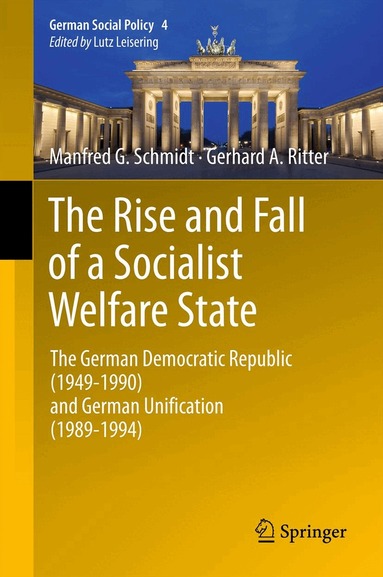
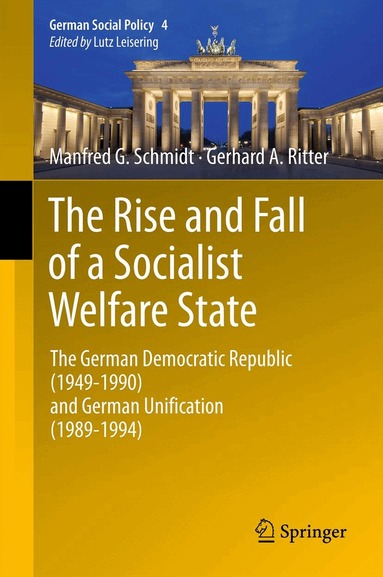
Rise and Fall of a Socialist Welfare State
Manfred G. Schmidt, Gerhard A. Ritter
Inbunden, 2012
2 159 kr
Hoppa över listan




Du kanske också är intresserad av
Inside Nazi Germany: Conformity, Opposition, and Racism in Everyday Life
Detlev J. K. Peukert
Häftad
719 kr
Del 2
Die Erfahrung der Inflation im internationalen Zusammenhang und Vergleich / The Experience of Inflation International and Comparative Studies
Gerald D. Feldman, Carl-Ludwig Holtfrerich, Gerhard A. Ritter, Peter-Christian Witt
Inbunden, 1984
2 729 kr
Soziale Frage und Sozialpolitik in Deutschland seit Beginn des 19. Jahrhunderts
Gerhard A. Ritter
Häftad, 2013
749 kr
Del 4
Del 22
Deutschkonservative Partei Und Die Deutsche Reichspartei in Bayern 1890-1914
Volker Stalmann, Gerhard A Ritter
Häftad, 2002
769 kr
Del 18
Del 17