
Del 11 i serien Cambridge Studies in Latin American and Iberian Literature
The Politics of Spanish American 'Modernismo'
By Exquisite Design
Häftad, Engelska, 2010
809 kr
Beställningsvara. Skickas inom 5-8 vardagar. Fri frakt för medlemmar vid köp för minst 249 kr.
Finns i fler format (1)
The Politics of Spanish American Modernismo, initially published in 1998, elucidates the professional and literary means by which Spanish American modernistas negotiated a cultural politics of rapprochement with Spain and Europe in order to differentiate their Americanness from that of the United States. Gerard Aching argues that these turn-of-the-century men of letters were in fact responsible for the burgeoning role that intellectuals and writers had (and continue to have) in defining pan-Hispanicism. Aching's arguments contribute to debates about modernity and the colonial/postcolonial condition in nineteenth-century Hispanic literatures. The interdisciplinary approach will appeal to scholars in literature, cultural studies, Latin American studies and history.
Produktinformation
- Utgivningsdatum2010-06-24
- Mått152 x 229 x 11 mm
- Vikt290 g
- FormatHäftad
- SpråkEngelska
- SerieCambridge Studies in Latin American and Iberian Literature
- Antal sidor192
- FörlagCambridge University Press
- ISBN9780521153812
Tillhör följande kategorier
Hoppa över listan
Mer från samma serie
Del 4
Del 3
Del 5
Del 1
Del 8
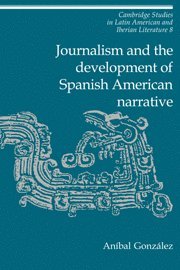
Journalism and the Development of Spanish American Narrative
Aníbal González
Häftad, 2006
829 kr
Del 14
Del 2
Del 6
Del 7
Del 9
Hoppa över listan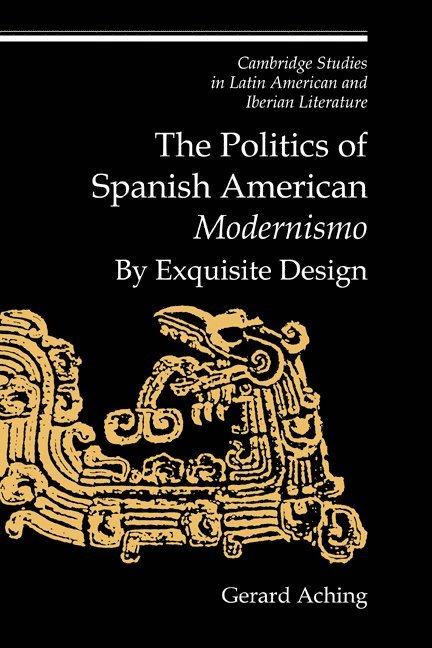

Du kanske också är intresserad av
Del 11
The Politics of Spanish American 'Modernismo'
Gerard Aching, Enrique Pupo-Walker
Inbunden, 1997
2 379 kr
Del 2
Del 4
Del 6
Del 3
Del 7
Del 1
- Nyhet
Del 3
Del 8
Journalism and the Development of Spanish American Narrative
Aníbal González
Häftad, 2006
829 kr