
Del i serien Asia Pacific Modern
Politics of Gender in Colonial Korea
Education, Labor, and Health, 1910–1945
Häftad, Engelska, 2014
579 kr
Beställningsvara. Skickas inom 5-8 vardagar. Fri frakt för medlemmar vid köp för minst 249 kr.
Finns i fler format (1)
This study examines how the concept of "Korean woman" underwent a radical transformation in Korea's public discourse during the years of Japanese colonialism. Theodore Jun Yoo shows that as women moved out of traditional spheres to occupy new positions outside the home, they encountered the pervasive control of the colonial state, which sought to impose modernity on them. While some Korean women conformed to the dictates of colonial hegemony, others took deliberate pains to distinguish between what was "modern" (e.g., Western outfits) and thus legitimate, and what was "Japanese," and thus illegitimate. Yoo argues that what made the experience of these women unique was the dual confrontation with modernity itself and with Japan as a colonial power.
Produktinformation
- Utgivningsdatum2014-05-29
- Mått152 x 229 x 23 mm
- Vikt499 g
- FormatHäftad
- SpråkEngelska
- SerieAsia Pacific Modern
- Antal sidor328
- FörlagUniversity of California Press
- ISBN9780520283817
Tillhör följande kategorier
Hoppa över listan
Mer från samma författare
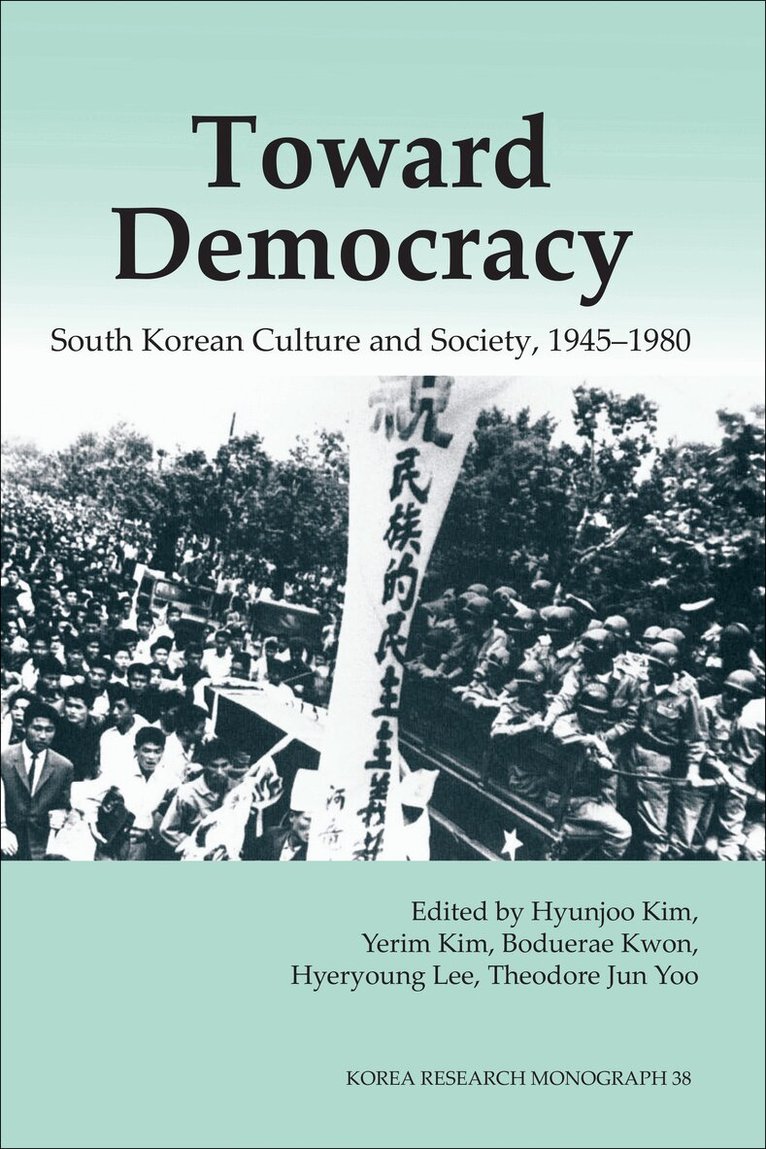
Toward Democracy
Hyunjoo Kim, Yerim Kim, Boduerae Kwon, Hyeryoung Lee, Theodore Jun Yoo
Häftad, 2020
799 kr
Hoppa över listan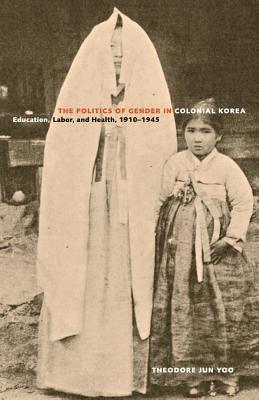
Du kanske också är intresserad av
Toward Democracy
Hyunjoo Kim, Yerim Kim, Boduerae Kwon, Hyeryoung Lee, Theodore Jun Yoo
Häftad, 2020
799 kr