
The Original Compromise
What the Constitution's Framers were Really Thinking
Inbunden, Engelska, 2013
1 169 kr
Beställningsvara. Skickas inom 5-8 vardagar. Fri frakt för medlemmar vid köp för minst 249 kr.
What were the Founding Fathers really thinking when they gathered in the Pennsylvania State House to draft the United States Constitution? When answering this question, most have relied on The Federalist Papers, which was first published in book form after the close of the Convention, in 1788. To this day, the book's status is sacrosanct for most Americans. Yet as David Brian Robertson shows, the Papers represented one side of the debate and does not fully capture the political sensibilities that produced the U.S. Constitution. Robertson, drawing from the full range of contemporary sources and not just the Papers, provides a truly authoritative account of the founders' collective political reasoning during the Convention. Organized thematically, each chapter covers a crucial Constitutional issue: the respective roles of the executive, the judiciary, and the legislature; the balance between the federal government and the states; slavery; and war and peace. In virtually every instance, the process was decidedly political, fractious, and piecemeal. As much as they wanted to design the government that would best serve their people, the Founders struggled to balance their broad ideals with self-interested policies and procedures. Robertson's boldly revisionist account of the political horse-trading that dominated the Convention not only greatly enriches our understanding of the nation's founding; it also elucidates why the government they created has proven so difficult to use.
Produktinformation
- Utgivningsdatum2013-01-17
- Mått163 x 236 x 30 mm
- Vikt567 g
- FormatInbunden
- SpråkEngelska
- Antal sidor344
- FörlagOUP USA
- ISBN9780199796298
Tillhör följande kategorier
Hoppa över listan
Mer från samma författare
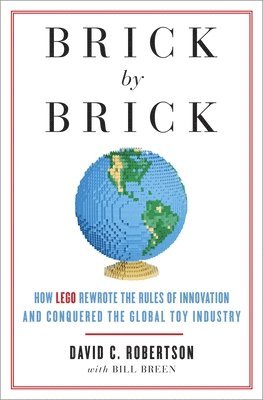
Brick by Brick: How LEGO Rewrote the Rules of Innovation and Conquered the Global Toy Industry
David Robertson, Bill Breen
Häftad, 2014
299 kr
Hoppa över listan





Du kanske också är intresserad av
- Nyhet
Del 11
- Nyhet
Del 3
- Nyhet
- Nyhet
Del 6
- Nyhet
Del 4
Del 1
Del 3
Del 2
Del 7