
The Invention of the Newspaper
English Newsbooks 1641-1649
Häftad, Engelska, 2005
1 629 kr
Beställningsvara. Skickas inom 5-8 vardagar. Fri frakt för medlemmar vid köp för minst 249 kr.
Finns i fler format (1)
The first weekly English newsbooks appeared in November 1641, on the eve of the civil war. Though they provoked animosity and fanned the flames of civil war, they have survived almost without interruption to the present day, transformed into the modern newspaper. The Invention of the Newspaper is the first detailed account of the origins and early development of the English newspaper, using a wealth of new evidence to show the causes of the first newsbooks, and their many and complex roles in the turbulent society in which they participated.Newsbooks were widely read and exerted considerable influence not only over immediate perceptions of news, but also over subsequent histories of the seventeenth-century, extending even to the present day. Using and synthesising approaches from literary criticism, history, and the 'socoiology of texts', The Invention of the Newspaper shows how newsbooks transformed print culture, fed the public hunger for news, and in turn created a market for news periodical. Charting the newsbook's development as a form and a commercial enterprise, its literary qualities, and its relationship to other means of communication, The Invention of the Newspaper shows the newsbook's gradual and irresistible dominance of the market for information.
Produktinformation
- Utgivningsdatum2005-07-07
- Mått138 x 215 x 22 mm
- Vikt499 g
- FormatHäftad
- SpråkEngelska
- Antal sidor400
- FörlagOUP OXFORD
- ISBN9780199282340
Tillhör följande kategorier
Hoppa över listan





Mer från samma författare
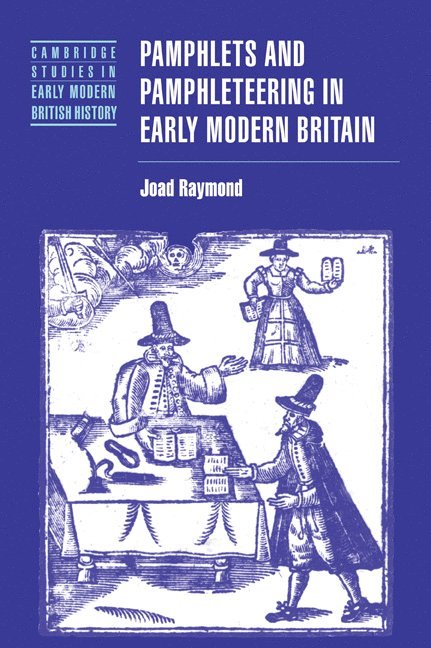
Pamphlets and Pamphleteering in Early Modern Britain
Joad Raymond, Anthony Fletcher
Häftad, 2006
1 069 kr
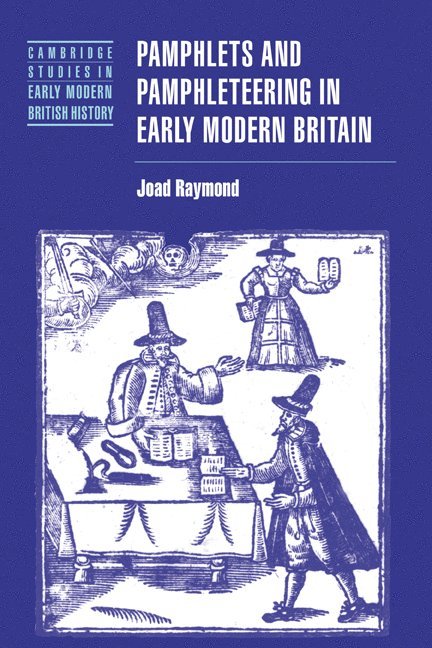
Pamphlets and Pamphleteering in Early Modern Britain
Joad Raymond, Anthony Fletcher, John Guy
Inbunden, 2003
2 689 kr
Del 7
Hoppa över listan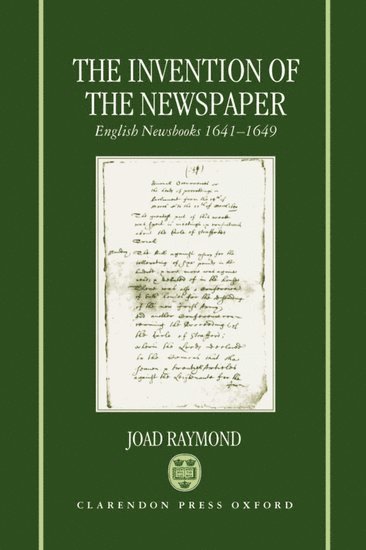

Du kanske också är intresserad av
Pamphlets and Pamphleteering in Early Modern Britain
Joad Raymond, Anthony Fletcher
Häftad, 2006
1 069 kr
Pamphlets and Pamphleteering in Early Modern Britain
Joad Raymond, Anthony Fletcher, John Guy
Inbunden, 2003
2 689 kr
Del 30
Del 7