
The German Experience of Professionalization
Modern Learned Professions and their Organizations from the Early Nineteenth Century to the Hitler Era
Häftad, Engelska, 2002
629 kr
Beställningsvara. Skickas inom 5-8 vardagar. Fri frakt för medlemmar vid köp för minst 249 kr.
Finns i fler format (1)
Modern learned professions (medicine, law, teaching, engineering, and others) developed in central Europe just as vigorously as in England or America. Yet their close relationship with state power - more typical of the world development of professions than the Anglo-American model - led to a different historical experience of professionalization. This work is the first to explore that experience in a comprehensive way from the time when modern learned professions arose until the eve of World War II. Based on the history and surviving records of German professional organizations, it shows how the learned professions emerged gradually in the nineteenth century from the shadow of strong state regulation to achieve a high degree of autonomy and control over professional standards by the First World War. By studying professional groups collectively, it gives a more contoured picture of their fate under National Socialism than works dedicated primarily to the phenomenon of fascism itself.
Produktinformation
- Utgivningsdatum2002-08-08
- Mått153 x 229 x 23 mm
- Vikt442 g
- FormatHäftad
- SpråkEngelska
- Antal sidor268
- FörlagCambridge University Press
- ISBN9780521522533
Tillhör följande kategorier
Hoppa över listan


Mer från samma författare
Berlin's Confidential Evaluation of American Universities
Charles E McClelland, Martin Meyer, Gregory R Zieren
Häftad, 2026
499 kr
Hoppa över listan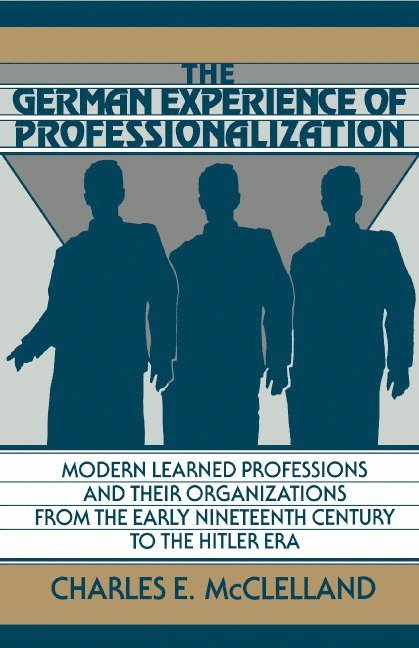






Du kanske också är intresserad av
Berlin's Confidential Evaluation of American Universities
Charles E McClelland, Martin Meyer, Gregory R Zieren
Häftad, 2026
499 kr
- Nyhet
- Nyhet
- Nyhet
Del 6
- Nyhet
Del 11
Del 3
Del 1