
Del 106 i serien Cambridge Studies in American Literature and Culture
The Complicity of Imagination
The American Renaissance, Contests of Authority, and Seventeenth-Century English Culture
Häftad, Engelska, 2009
829 kr
Beställningsvara. Skickas inom 5-8 vardagar. Fri frakt för medlemmar vid köp för minst 249 kr.
Finns i fler format (1)
The Complicity of Imagination examines the rich and complex relationship between four nineteenth-century authors and the culture and politics of seventeenth-century England. Challenging the notion that antebellum Americans were burdened by a sense of cultural inferiority in both their thought and their writing, this 1997 study portrays an American Renaissance whose writers were deeply enough read in the literature and controversies of seventeenth-century England to appropriate its cultural artifacts for their own purposes. By exploring the broader cultural implications of intertextual relationships, this book demonstrates how literary texts participate in the artistic, political and theological tensions within American culture.
Produktinformation
- Utgivningsdatum2009-03-19
- Mått152 x 229 x 18 mm
- Vikt460 g
- FormatHäftad
- SpråkEngelska
- SerieCambridge Studies in American Literature and Culture
- Antal sidor312
- FörlagCambridge University Press
- ISBN9780521105545
Tillhör följande kategorier
Hoppa över listan
Mer från samma serie
Del 128
Del 147
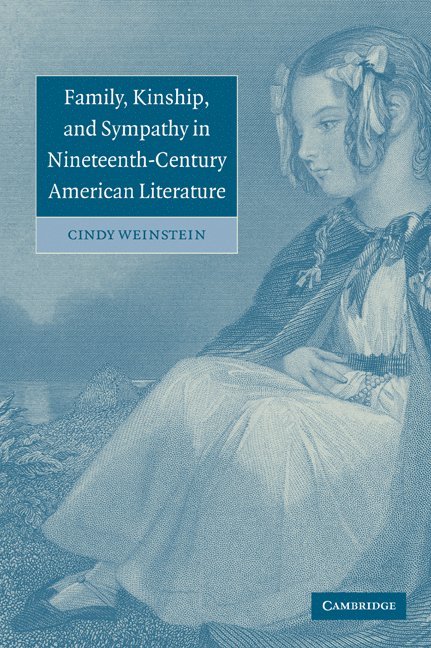
Family, Kinship, and Sympathy in Nineteenth-Century American Literature
Cindy Weinstein, Albert Gelpi
Häftad, 2006
979 kr
Del 134
Del 135
Del 133
Del 90
Del 108
Del 48
Del 143
Del 89
Hoppa över listan








Du kanske också är intresserad av
Del 106
- Nyhet
Del 3
- Nyhet
Del 11
- Nyhet
Del 4
- Nyhet
Del 6
Del 1
Del 3
Del 2