
The Comfort of Strangers
Social Life and Literary Form
Inbunden, Engelska, 2016
2 489 kr
Beställningsvara. Skickas inom 5-8 vardagar. Fri frakt för medlemmar vid köp för minst 249 kr.
Finns i fler format (1)
The Comfort of Strangers argues for a new understanding of the relation between literary form and the socially dense environments of modernity. In a period of vast population increase in Britain, literary form imagined and licensed new ways of being with, and getting away from, other people. The generically diverse works that McWeeny calls "the literature of social density" illuminate surprising investments in ephemeral communities, anonymity, and social distance in the age of Victorian sympathy. With chapters on Matthew Arnold, George Eliot, Oscar Wilde, and Henry James, The Comfort of Strangers discovers a species of Victorian sociality not imagined under J.S. Mill's description in On Liberty of society as a crowd impinging upon the individual: one attuned to the relational possibilities offered by the impersonal intimacy of life among those unknown and the power of weak social ties.
Produktinformation
- Utgivningsdatum2016-02-18
- Mått160 x 236 x 27 mm
- Vikt454 g
- FormatInbunden
- SpråkEngelska
- Antal sidor240
- FörlagOUP USA
- ISBN9780199797202
Tillhör följande kategorier
Hoppa över listan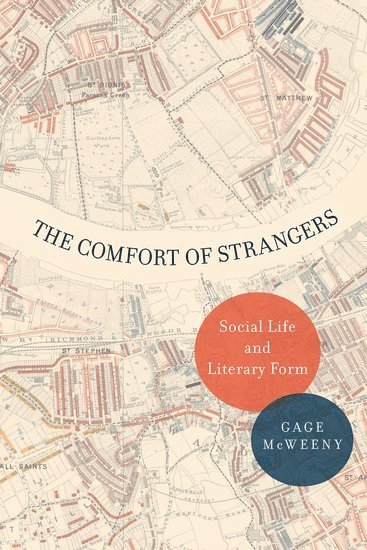









Du kanske också är intresserad av
- Nyhet
Del 3
- Nyhet
Del 11
- Nyhet
Del 4
- Nyhet
Del 1
- Nyhet
Del 4
- Nyhet
Del 6
- Nyhet
Del 3
Del 3