
Del 76 i serien Cambridge Russian, Soviet and Post-Soviet Studies
The Bread of Affliction
The Food Supply in the USSR during World War II
Häftad, Engelska, 20020-3 år
829 kr
Beställningsvara. Skickas inom 5-8 vardagar. Fri frakt för medlemmar vid köp för minst 249 kr.
Finns i fler format (1)
This book tells how the Soviet Union fed itself after the invasion by the Germans during World War II. The author argues that central planning became much less important in feeding the population, and civilians were thereby forced to become considerably more self reliant in feeding themselves. A rationing system was instituted soon after the war began, but quickly became irrelevant because of the chronic food shortages. The breakdown in central supplies of food was accompanied by the diminished importance of the rouble, which in many places was replaced by bread and clothing as the medium of exchange. Although the Soviet army was given high precedence over civilians, the author also shows that the population living under German occupation was much worse off than were Soviet civilians living in the rear. In addition to extensive use of American and German archives from the war period, the author interviewed more than thirty Soviet emigres who survived the war.
Produktinformation
- Utgivningsdatum2002-08-08
- Mått153 x 229 x 19 mm
- Vikt453 g
- Ålder0-3
- FormatHäftad
- SpråkEngelska
- Läsålder0-3
- SerieCambridge Russian, Soviet and Post-Soviet Studies
- Antal sidor276
- FörlagCambridge University Press
- ISBN9780521522830
Tillhör följande kategorier
Hoppa över listan
Mer från samma författare
Great Market Debate in Soviet Economics: An Anthology
David M Jones, William Moskoff
Inbunden, 1991
1 999 kr
Great Market Debate in Soviet Economics: An Anthology
David M Jones, William Moskoff
Häftad, 1991
659 kr
Hard Times: Impoverishment and Protest in the Perestroika Years - Soviet Union, 1985-91
William Moskoff
Inbunden, 1993
3 919 kr
Hard Times: Impoverishment and Protest in the Perestroika Years - Soviet Union, 1985-91
William Moskoff
Häftad, 1993
979 kr
Hoppa över listan

Mer från samma serie
Del 90
Del 48
Materials for a Balance of the Soviet National Economy, 1928-1930
S. G. Wheatcroft, R. W. Davies
Häftad, 2005
919 kr
Del 96
Del 105
Del 67
Del 49
Del 91
Del 93
Del 56
Del 44
Hoppa över listan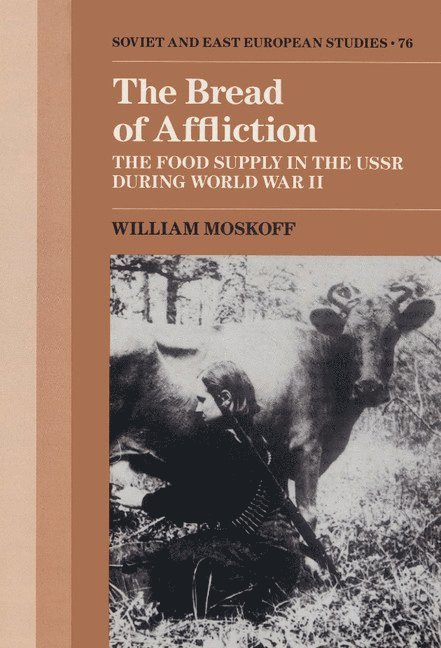


Du kanske också är intresserad av
Del 76
Great Market Debate in Soviet Economics: An Anthology
David M Jones, William Moskoff
Inbunden, 1991
1 999 kr
Hard Times: Impoverishment and Protest in the Perestroika Years - Soviet Union, 1985-91
William Moskoff
Häftad, 1993
979 kr
Great Market Debate in Soviet Economics: An Anthology
David M Jones, William Moskoff
Häftad, 1991
659 kr
Hard Times: Impoverishment and Protest in the Perestroika Years - Soviet Union, 1985-91
William Moskoff
Inbunden, 1993
3 919 kr
- Nyhet
Del 3
- Nyhet
Del 11