
Del 30 i serien Cambridge Studies in Medieval Literature
Texts and the Self in the Twelfth Century
Inbunden, Engelska, 1996
2 429 kr
Beställningsvara. Skickas inom 5-8 vardagar. Fri frakt för medlemmar vid köp för minst 249 kr.
Finns i fler format (1)
Texts and the Self in the Twelfth Century analyses key twelfth-century Latin and vernacular texts which articulate a subjective, often autobiographical, stance. The contention is that the self forged in medieval literature could not have come into existence without both the gap between Latinity and the vernacular and a shift in perspective towards a visual and spatial orientation. This results in a self which is not an agent that will act on the outside world like the Renaissance self, but, rather, one which inhabits a potential, middle ground, or 'space of agency', explained here partly in terms of object-relations theory.
Produktinformation
- Utgivningsdatum1996-12-12
- Mått159 x 236 x 16 mm
- Vikt384 g
- FormatInbunden
- SpråkEngelska
- SerieCambridge Studies in Medieval Literature
- Antal sidor184
- FörlagCambridge University Press
- ISBN9780521572798
Tillhör följande kategorier
Hoppa över listan
Mer från samma serie
Del 94
Del 14
Del 38
Del 25
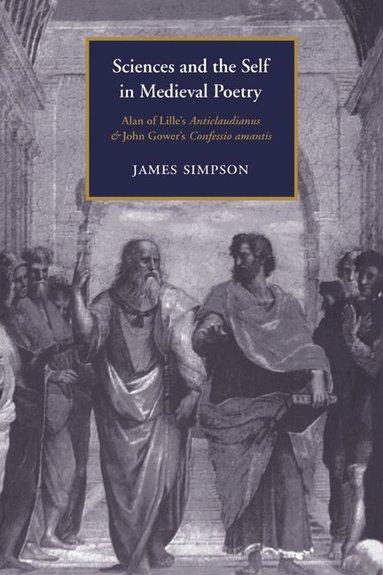
Sciences and the Self in Medieval Poetry
James Simpson, Alastair Minnis, Patrick Boyde
Häftad, 2005
1 099 kr
Del 36
Del 22
Del 31
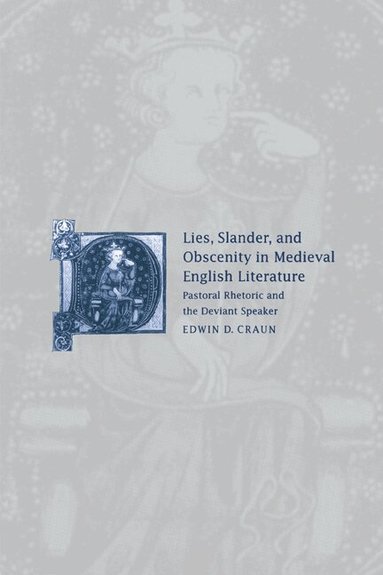
Lies, Slander and Obscenity in Medieval English Literature
Edwin David Craun, Alastair Minnis, Patrick Boyde
Häftad, 2005
1 049 kr
Del 39
Del 44
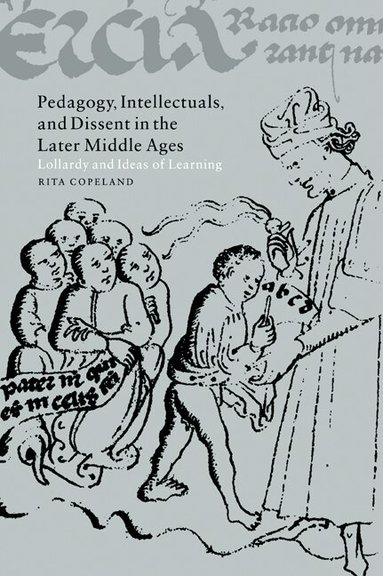
Pedagogy, Intellectuals, and Dissent in the Later Middle Ages
Rita Copeland, Alastair Minnis
Häftad, 2005
1 019 kr
Del 37
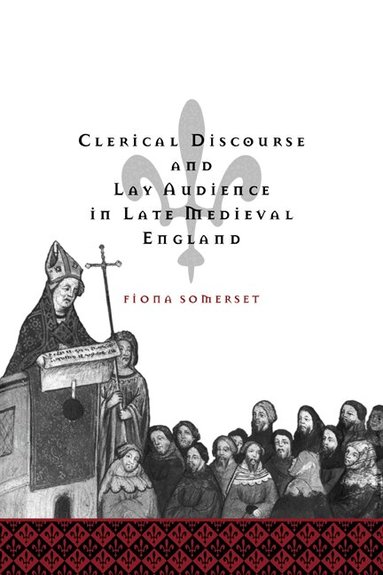
Clerical Discourse and Lay Audience in Late Medieval England
Fiona Somerset, Alastair Minnis, Patrick Boyde
Häftad, 2005
809 kr
Hoppa över listan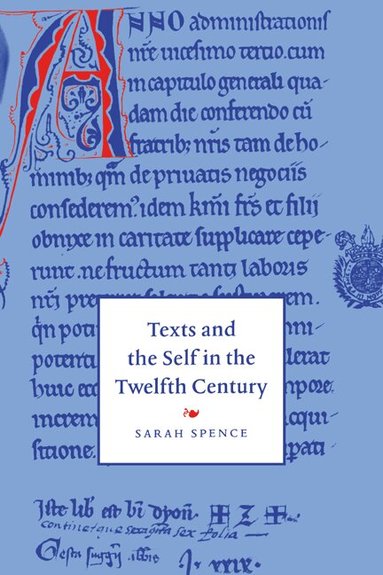

Du kanske också är intresserad av
Del 30
Texts and the Self in the Twelfth Century
Sarah Spence, Alastair Minnis, Patrick Boyde
Häftad, 2006
849 kr
- Nyhet
Del 7
- Nyhet
Del 11
- Nyhet
- Nyhet
Del 4
- Nyhet
Del 6