
Temporary Future: The Fiction of David Mitchell
Häftad, Engelska, 2015
649 kr
Beställningsvara. Skickas inom 10-15 vardagar. Fri frakt för medlemmar vid köp för minst 249 kr.
Finns i fler format (1)
Having emerged as one the leading contemporary British writers, David Mitchell is rapidly taking his place amongst British novelists with the gravitas of an Ishiguro or a McEwan. Written for a wide constituency of readers of contemporary literature, A Temporary Future: The Fiction of David Mitchell explores Mitchell’s main concerns—including those of identity, history, language, imperialism, childhood, the environment, and ethnicity—across the six novels published so far, as well as his protean ability to write in multiple and diverse genres. It places Mitchell in the tradition of Murakami, Sebald, and Rushdie—writers whose works explore narrative in an age of globalization and cosmopolitanism. Patrick O’Donnell traces the through-lines of Mitchell’s work from ghostwritten to The Bone Clocks and, with a chapter on each of the six novels, charts the evolution of Mitchell’s fictional project.
Produktinformation
- Utgivningsdatum2015-03-26
- Mått140 x 216 x 18 mm
- Vikt304 g
- FormatHäftad
- SpråkEngelska
- Antal sidor224
- FörlagBloomsbury Publishing Plc
- ISBN9781441157287
Tillhör följande kategorier
Hoppa över listan



Mer från samma författare
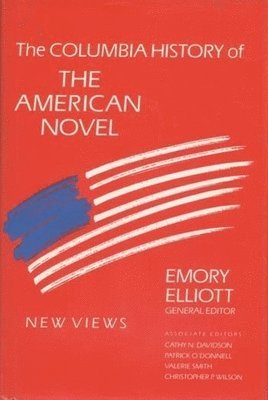
Columbia History of the American Novel
Emory Elliott, Cathy Davidson, Patrick O'Donnell, Valerie Smith, Christopher Wilson
Inbunden, 1991
1 299 kr
Hoppa över listan
Du kanske också är intresserad av
Columbia History of the American Novel
Emory Elliott, Cathy Davidson, Patrick O'Donnell, Valerie Smith, Christopher Wilson
Inbunden, 1991
1 299 kr