
Tactics of Toleration
A Refugee Community in the Age of Religious Wars
Häftad, Engelska, 2010
639 kr
Beställningsvara. Skickas inom 10-15 vardagar. Fri frakt för medlemmar vid köp för minst 249 kr.
The Tactics of Toleration examines the preconditions and limits of toleration during an age in which Europe was sharply divided along religious lines. During the Age of Religious Wars, refugee communities in borderland towns like the Rhineland city of Wesel were remarkably religiously diverse and culturally heterogeneous places. Examining religious life from the perspective of Calvinists, Lutherans, Mennonites, and Catholics, this book examines how residents dealt with pluralism during an age of deep religious conflict and intolerance. Based on sources that range from theological treatises to financial records and from marriage registries to testimonies before secular and ecclesiastical courts, this project offers new insights into the strategies that ordinary people developed for managing religious pluralism during the Age of Religious Wars.Historians have tended to emphasize the ways in which people of different faiths created and reinforced religious differences in the generations after the Reformation's break-up of Christianity, usually in terms of long-term historical narratives associated with modernization, including state building, confessionalization, and the subsequent rise of religious toleration after a century of religious wars. In contrast, Jesse Spohnholz demonstrates that although this was a time when Christians were engaged in a series of brutal religious wars against one another, many were also learning more immediate and short-term strategies to live alongside one another. This book considers these "tactics for toleration" from the vantage point of religious immigrants and their hosts, who learned to coexist despite differences in language, culture, and religion. It demands that scholars reconsider toleration, not only as an intellectual construct that emerged out of the Enlightenment, but also as a dynamic set of short-term and often informal negotiations between ordinary people, regulating the limits of acceptable and unacceptable behavior.Published by University of Delaware Press. Distributed worldwide by Rutgers University Press.
Produktinformation
- Utgivningsdatum2010-12-28
- Mått156 x 234 x 23 mm
- Vikt573 g
- FormatHäftad
- SpråkEngelska
- Antal sidor334
- FörlagUniversity of Delaware Press
- ISBN9781644531518
Tillhör följande kategorier
Hoppa över listan







Mer från samma författare
Exile and Religious Identity, 1500–1800
Gary K Waite, Jesse Spohnholz, Gary K. Waite
Häftad, 2018
1 079 kr
Del 23
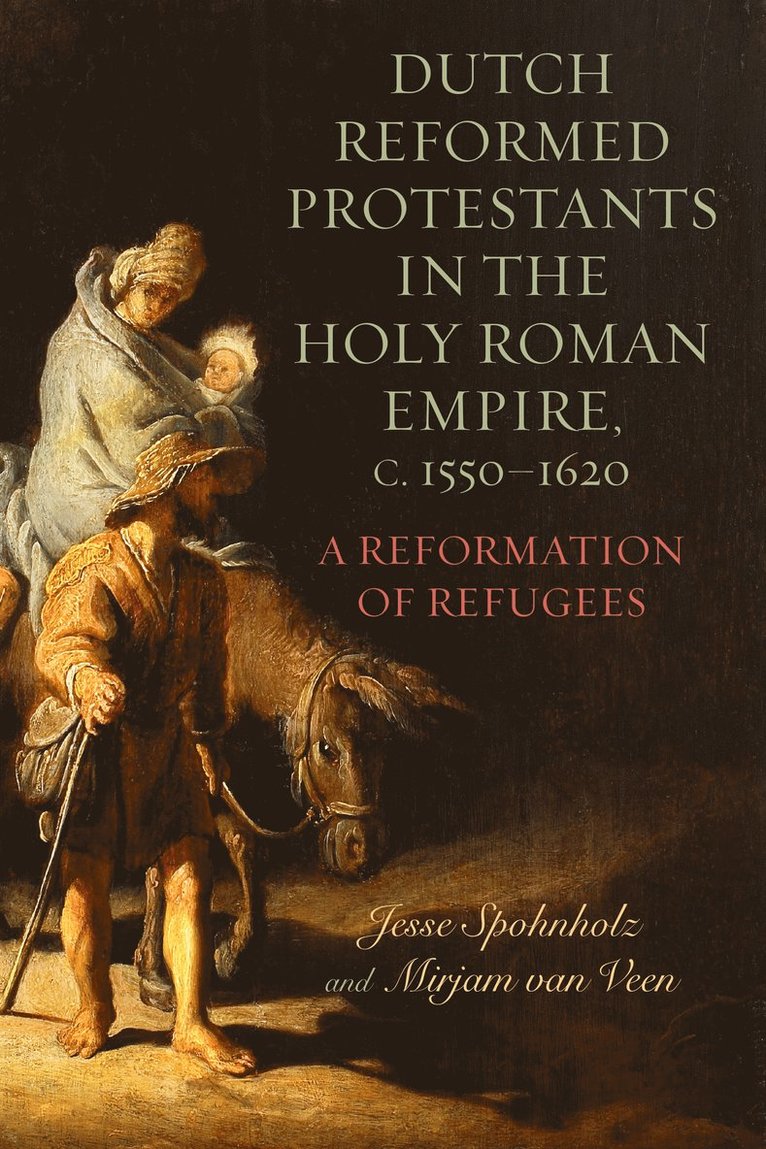
Dutch Reformed Protestants in the Holy Roman Empire, c.1550–1620
Mirjam van Veen, Jesse Spohnholz
Häftad, 2024
459 kr
Del 16
Archeologies of Confession
Carina L. Johnson, David M. Luebke, Marjorie Elizabeth Plummer, Jesse Spohnholz
Inbunden, 2017
2 449 kr
Archeologies of Confession
Carina L. Johnson, David M. Luebke, Marjorie Elizabeth Plummer, Jesse Spohnholz
Häftad, 2019
669 kr
Exile and Religious Identity, 1500–1800
Gary K Waite, Jesse Spohnholz, Gary K. Waite
Inbunden, 2014
3 509 kr
Hoppa över listan
Du kanske också är intresserad av
Del 23
Dutch Reformed Protestants in the Holy Roman Empire, c.1550–1620
Mirjam van Veen, Jesse Spohnholz
Häftad, 2024
459 kr
Del 16
Archeologies of Confession
Carina L. Johnson, David M. Luebke, Marjorie Elizabeth Plummer, Jesse Spohnholz
Inbunden, 2017
2 449 kr
Archeologies of Confession
Carina L. Johnson, David M. Luebke, Marjorie Elizabeth Plummer, Jesse Spohnholz
Häftad, 2019
669 kr
Exile and Religious Identity, 1500–1800
Gary K Waite, Jesse Spohnholz, Gary K. Waite
Inbunden, 2014
3 509 kr
Exile and Religious Identity, 1500–1800
Gary K Waite, Jesse Spohnholz, Gary K. Waite
Häftad, 2018
1 079 kr
- Nyhet
Del 3