
Supreme Court against the Criminal Jury
Social Science and the Palladium of Liberty
Häftad, Engelska, 2014
839 kr
Beställningsvara. Skickas inom 10-15 vardagar. Fri frakt för medlemmar vid köp för minst 249 kr.
The Supreme Court against the Criminal Jury: Social Science and the Palladium of Liberty is an analysis of the United States Supreme Court decisions in what has come to be called the “jury-size” and “jury-decision rule” cases. In Williams v. Florida (1970) and Ballew v. Georgia (1978), a majority of the Supreme Court looked to history, empirical studies, and functional analysis to support its claim that there was “no discernible difference” between the verdicts of juries of six and juries of twelve. In the process the Court also decided that the number twelve was an historical accident and that the twelve-member jury was not an essential ingredient of trial by jury. Two years later, the Court, following essentially the same line of reasoning used in Williams, decided in the companion cases Apodaca v. Oregon (1972) and Johnson v. Louisiana (1972) that defendants were as well served with juries that reached verdicts by a majority vote of 11-1,10-2 and 9-3 as they were with unanimous jury verdicts. In these cases the Supreme Court rejected the centuries old common law view that the unanimous jury verdict was an essential element of trial by jury. With these four decisions, the criminal jury as it had been known for more than six hundred years under the common law and the Constitution was in principle abandoned. We critique these decisions from the perspective of unreliable jury studies and the impact of these decision on jury nullification.
Produktinformation
- Utgivningsdatum2014-06-12
- Mått155 x 227 x 10 mm
- Vikt204 g
- FormatHäftad
- SpråkEngelska
- Antal sidor140
- FörlagBloomsbury Publishing Plc
- ISBN9780739136225
Tillhör följande kategorier
Hoppa över listan
Mer från samma författare
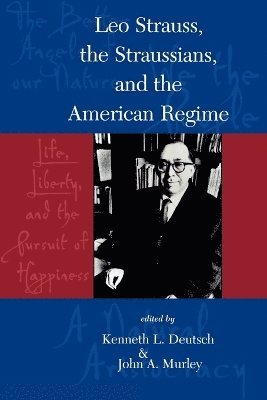
Leo Strauss, The Straussians, and the Study of the American Regime
Kenneth L. Deutsch, John A. Murley
Häftad, 1999
1 129 kr
Hoppa över listan


Du kanske också är intresserad av
Leo Strauss, The Straussians, and the Study of the American Regime
Kenneth L. Deutsch, John A. Murley
Häftad, 1999
1 129 kr
- Nyhet
Del 3