
Del i serien Youth, Young Adulthood and Society
Structure and Agency in Young People’s Lives
Theory, Methods and Agendas
Inbunden, Engelska, 2021
3 309 kr
Beställningsvara. Skickas inom 10-15 vardagar. Fri frakt för medlemmar vid köp för minst 249 kr.
Structure and Agency in Young People’s Lives brings together different takes on the possible combinations of agency and structure in the life course, thus rejecting the notion that young individuals are the single masters of their lives, but also the view that their social destinies are completely out of their hands. ‘How did I get here?’ This is a question young people have always asked themselves and is often asked by youth researchers. There is no easy and single answer. The lives that are told, on one hand, and their interpretation, on the other, may have the underlying idea of 'own doing' or the idea of 'social determinism' or, more accurately and frequently, a combination of the two. This collection constitutes a comprehensive map on how to make sense of youth’s biographies and trajectories, it questions and reshapes the discussion on the role and responsibility of youth studies in the understanding of how people juggle opportunities and constraints, and contributes to escaping what Furlong and Cartmel identified as the "epistemological fallacy of late modernity", in which young people find themselves responsible for collective failures or inevitabilities. It can thus interest students, researchers and professors, youth workers and all of those who work for and with young people.
Produktinformation
- Utgivningsdatum2021-05-13
- Mått156 x 234 x 23 mm
- Vikt560 g
- FormatInbunden
- SpråkEngelska
- SerieYouth, Young Adulthood and Society
- Antal sidor270
- FörlagTaylor & Francis Ltd
- ISBN9780367341770
Tillhör följande kategorier
Hoppa över listan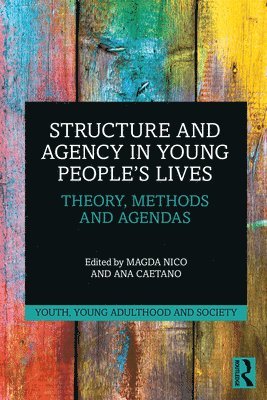

Du kanske också är intresserad av
Membrane Technology: Applications to Industrial Wastewater Treatment
Ana Caetano, M.N. de Pinho, Enrico Drioli, Herbert Muntau
Häftad, 2012
1 439 kr
Routledge Handbook of Contemporary Inequalities and the Life Course
Magda Nico, Gary Pollock
Inbunden, 2021
4 999 kr
Routledge Handbook of Contemporary Inequalities and the Life Course
Magda Nico, Gary Pollock
Häftad, 2023
949 kr
Membrane Technology: Applications to Industrial Wastewater Treatment
Ana Caetano, M.N. de Pinho, Enrico Drioli, Herbert Muntau
Inbunden, 1994
1 439 kr
- Nyhet
Del 3
- Nyhet
Del 11
- Nyhet
Del 6