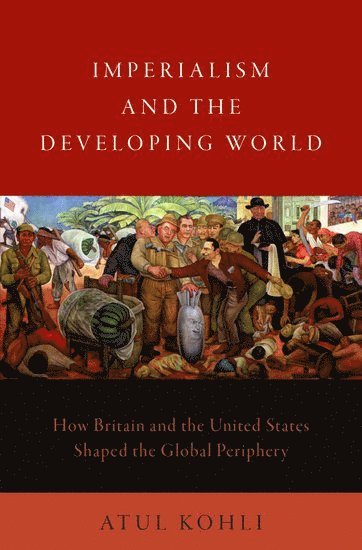
Why have some developing country states been more successful at facilitating industrialization than others? An answer to this question is developed by focusing both on patterns of state construction and intervention aimed at promoting industrialization. Four countries are analyzed in detail - South Korea, Brazil, India, and Nigeria - over the twentieth century. The states in these countries varied from cohesive-capitalist (mainly in Korea), through fragmented-multiclass (mainly in India), to neo-patrimonial (mainly in Nigeria). It is argued that cohesive-capitalist states have been most effective at promoting industrialization and neo-patrimonial states the least. The performance of fragmented-multiclass states falls somewhere in the middle. After explaining in detail as to why this should be so, the study traces the origins of these different state types historically, emphasizing the role of different types of colonialisms in the process of state construction in the developing world.
Atul Kohli is the David K. E. Bruce Professor of International Affairs at Princeton University. He has written or edited nine books and has published some fifty articles. His most recent publications included States, Markets and Just Growth (United Nations University Press, 2003) and The Success of India's Democracy (Cambridge University Press, 2002). He has held fellowships from the Russell Sage Foundation, Ford Foundation, and the Social Science Research Council, New York.
Introduction: states and industrialization in the global periphery; Part I. Galloping Ahead: Korea: 1. The colonial origins of a modern political economy: the Japanese lineage of Korea's cohesive-capitalist state; 2. The rhee interregnum: saving South Korea for cohesive capitalism; 3. A cohesive-capitalist state reimposed: Park Chung Hee and rapid industrialization; Part II. Two Steps Forward, One Step Back: Brazil; 4. Invited dependency: fragmented state and foreign resources in Brazil's early industrialization; 5. Grow now, pay later: state indebted industrialization in modern Brazil; Part III. Slow but Steady: India: 6. Origins of a fragmented-multiclass state and a sluggish economy: colonial India; 7. India's fragmented-multiclass state and protected industrialization; Part IV. Dashed Expectations: Nigeria: 8. Colonial Nigeria: origins of a neopatrimonial state and a commodity-exporting economy; 9. Sovereign Nigeria: neopatrimonialism and failure of industrialization; Conclusion: understanding states and state intervention in the global periphery.
'This manuscript is a tour de force of comparative, cross-regional, historically-based political economy analysis of one of the major issues that faced us in the last century and continues to do so now - why some states have done better than others at development. This type of work is very difficult to do, requiring broad contextual and technical knowledge, a keen sense of politics, and a deep knowledge of individual cases - all linked with excellent analytic capabilities. Professor Kohli has all of these and more.' Thomas Callaghy, University of Pennsylvania
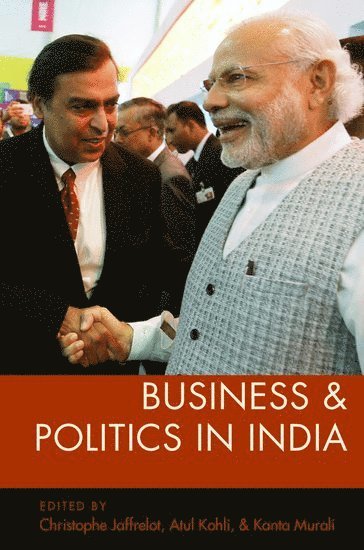
JAFFRELOT, Jaffrelot, Christophe Jaffrelot, Atul Kohli, Kanta Murali, Science Po-Paris) Jaffrelot, Christophe (director of the Centre d'etudes et de recherches, director of the Centre d'etudes et de recherches, Princeton University) Kohli, Atul (Professor of Politics, Professor of Politics, University of Toronto) Murali, Kanta (Assistant Professor of Political Science, Assistant Professor of Political Science
Joel Samuel Migdal, Atul Kohli, Vivienne Shue, Joel Samuel (University of Washington) Migdal, New Jersey) Kohli, Atul (Princeton University, New York) Shue, Vivienne (Cornell University, Joel S. Migdal
Miguel A. Centeno, Atul Kohli, Deborah J. Yashar, New Jersey) Centeno, Miguel A. (Princeton University, New Jersey) Kohli, Atul (Princeton University, New Jersey) Yashar, Deborah J. (Princeton University
Joel Samuel Migdal, Atul Kohli, Vivienne Shue, Joel Samuel (University of Washington) Migdal, New Jersey) Kohli, Atul (Princeton University, New York) Shue, Vivienne (Cornell University, Joel S. Migdal