
Del i serien Critiquing Religion: Discourse, Culture, Power
Spirituality, Corporate Culture, and American Business
The Neoliberal Ethic and the Spirit of Global Capital
Häftad, Engelska, 2018
659 kr
Beställningsvara. Skickas inom 10-15 vardagar. Fri frakt för medlemmar vid köp för minst 249 kr.
Finns i fler format (1)
By the early twenty-first century, Americans had embraced a holistic vision of work, that one’s job should be imbued with meaning and purpose, that business should serve not only stockholders but also the common good, and that, for many, should attend to the “spiritual” health of individuals and society alike.While many voices celebrate efforts to introduce “spirituality in the workplace” as a recent innovation that holds the potential to positively transform business and the American workplace, James Dennis LoRusso argues that workplace spirituality is in fact more closely aligned with neoliberal ideologies that serve the interests of private wealth and undermine the power of working people. LoRusso traces how this new moral language of business emerged as part of the larger shift away from the post-New Deal welfare state towards today’s global market-oriented social order. Building on other studies that emphasize the link between American religious conservatism and the rise of global capitalism, LoRusso shows how progressive “spirituality” remains a vital part of this story as well. Drawing on cultural history as well as case studies from New York City and San Francisco of businesses and leading advocates of workplace spirituality, this book argues that religion reveals much about work, corporate culture, and business in contemporary America.
Produktinformation
- Utgivningsdatum2018-08-23
- Mått156 x 234 x 11 mm
- Vikt304 g
- FormatHäftad
- SpråkEngelska
- SerieCritiquing Religion: Discourse, Culture, Power
- Antal sidor216
- FörlagBloomsbury Publishing PLC
- ISBN9781350081208
Tillhör följande kategorier
Hoppa över listan




Mer från samma serie
Christian Tourist Attractions, Mythmaking, and Identity Formation
Erin Roberts, Jennifer Eyl
Inbunden, 2018
2 359 kr
Christian Tourist Attractions, Mythmaking, and Identity Formation
Erin Roberts, Jennifer Eyl
Häftad, 2020
629 kr
Hoppa över listan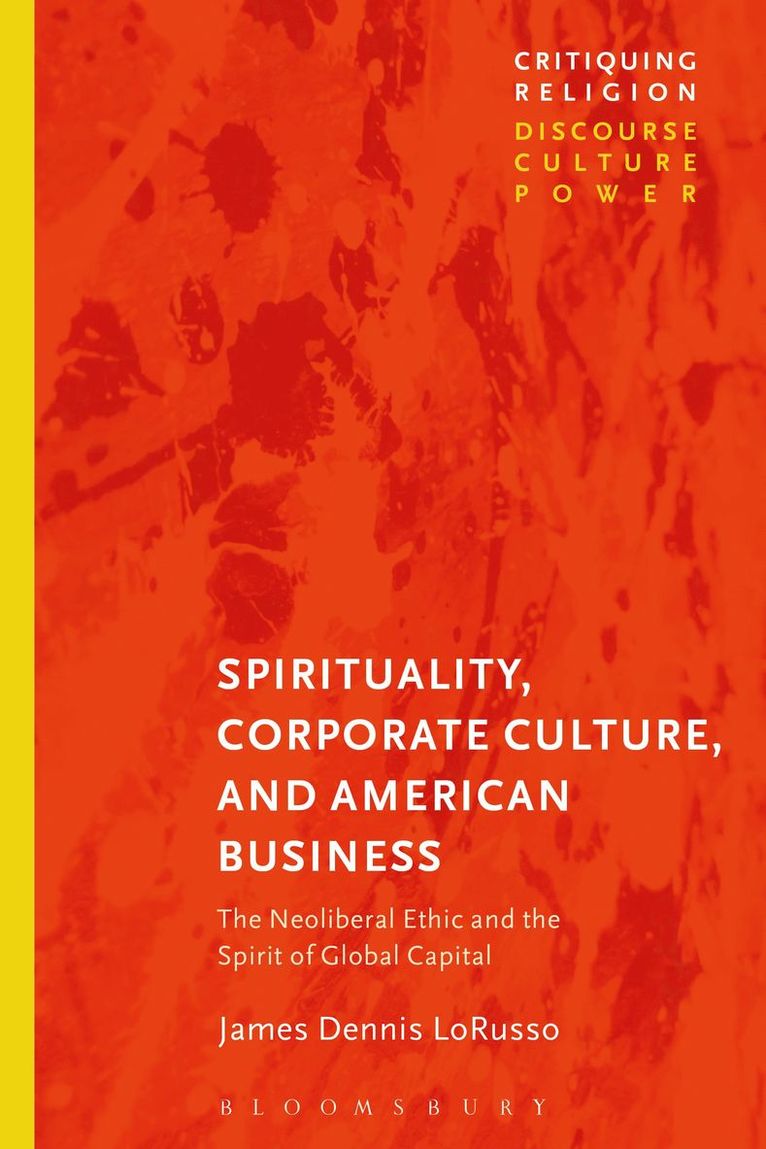


Du kanske också är intresserad av
Spirituality, Corporate Culture, and American Business
James Dennis LoRusso, Craig Martin
Inbunden, 2017
2 539 kr
Del 1