
Speaking Philosophically
Communication at the Limits of Discursive Reason
Inbunden, Engelska, 2023
1 679 kr
Beställningsvara. Skickas inom 10-15 vardagar. Fri frakt för medlemmar vid köp för minst 249 kr.
Finns i fler format (1)
Western philosophy has often claimed for itself not just a distinct sphere of knowledge, but a distinct form of communication, set against ordinary speech. In Speaking Philosophically, Thomas Sutherland proposes that for some philosophers, authentic philosophizing demands a specific manner of speaking or writing, adoption of which enables one to gesture toward truths that propositional speech will never grasp. Drawing on a variety of thinkers – Heraclitus, Plato, Kant, Fichte, Nietzsche, Kierkegaard, Weil, Foucault, and Irigaray – Sutherland argues this emphasis on the form of philosophical communication can function as an exclusionary mechanism, determining who is deemed capable of speaking philosophically.
Produktinformation
- Utgivningsdatum2023-04-20
- Mått236 x 160 x 20 mm
- Vikt540 g
- FormatInbunden
- SpråkEngelska
- Antal sidor240
- FörlagBloomsbury Publishing PLC
- ISBN9781350160828
Tillhör följande kategorier
Hoppa över listan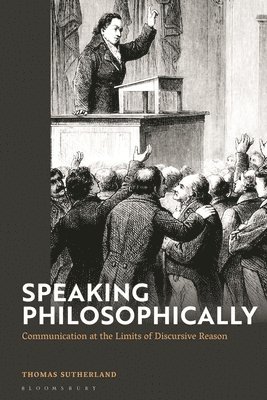







Du kanske också är intresserad av
- Nyhet
Del 11
- Nyhet
Del 3
Del 1
- Nyhet
Del 4
- Nyhet
- Nyhet
- Nyhet
Del 4