
Del i serien LSE Studies in Spanish History
Spanish Civil War in the British and French Press
The Badajoz, Alcázar of Toledo, Madrid, and Guernica News Stories
Inbunden, Engelska, 2024
2 899 kr
Beställningsvara. Skickas inom 5-8 vardagar. Fri frakt för medlemmar vid köp för minst 249 kr.
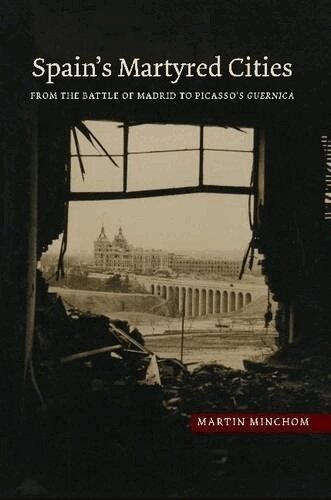
This book examines coverage of the Spanish Civil War by the leading French and British newspapers, and agencies like Havas and Reuters. Their foundational reporting created a bedrock of ‘shared news’, which reverberated in places as geographically and ideologically remote as Moscow or Berlin.It focuses on how key events like the mass killings in Badajoz, the siege of the Alcázar of Toledo, the Battle of Madrid, and the bombing of Guernica broke as immensely impactful news stories. By returning to first news, we can view familiar events with fresh eyes. For example, reporting on the siege of the Alcázar was shaped by Republican control of Toledo and had little in common with later Nationalist triumphalism. Guernica is studied as a breaking news story, but also as the culmination of a series of destructive aerial bombardments, including Madrid and Basque towns, which all fed into Picasso’s masterpiece. This book charts the links and transitions between day-to-day reporting, journalistic reportage, and transformative mythmaking.Minchom utilizes a wide range of material from newspaper libraries, digital resources and extensive archival research. The author draws on his interviews and correspondence with Sir Geoffrey Cox (1910–2008), News Chronicle’s Madrid correspondent in November 1936.
Produktinformation
- Utgivningsdatum2024-09-03
- Mått163 x 239 x undefined mm
- FormatInbunden
- SpråkEngelska
- SerieLSE Studies in Spanish History
- Antal sidor328
- FörlagLiverpool University Press
- ISBN9781835534069
Tillhör följande kategorier
Hoppa över listan




Mer från samma serie
Illusion of Statehood
Arnau Gonzalez Vilalta, Enric Ucelay-Da Cal, Arnau Gonzalez i Vilalta
Häftad, 2019
879 kr
House of Alice Roughton: Cambridge Doctor, Humanist, Patron and Activist
Xavier Munoz Puiggros
Häftad, 2019
799 kr
Hoppa över listan





Du kanske också är intresserad av
- Nyhet
Del 7
- Nyhet
- Nyhet
Del 11
- Nyhet
- Nyhet
Del 4
- Nyhet
Del 6
- Nyhet
Del 3