
Sovereign Equality and Moral Disagreement
Inbunden, Engelska, 2011
2 429 kr
Beställningsvara. Skickas inom 5-8 vardagar. Fri frakt för medlemmar vid köp för minst 249 kr.
The United Nations system's foundational principle of sovereign equality reflects persistent disagreement within its membership as to what constitutes a legitimate and just internal public order. While the boundaries of the system's pluralism have narrowed progressively in the course of the United Nations era, accommodation of diversity in modes of internal political organization remains a durable theme of the international order. This accommodation of diversity underlies the international system's commitment to preserve states' territorial integrity and political independence, often at the expense of other values. For those who impute to the international legal order an inherent purpose to establish a universal justice that transcends the boundaries of territorial communities, the legal prerogatives associated with state sovereignty appear as impediments to the global advance of legality. That view, however, neglects the danger of allowing powerful states to invoke universal principles to rationalize unilateral (and often self-serving) impositions upon weak states. Though frequently counterintuitive, limitations on cross-border exercises of power are supported by substantial moral and political considerations, and are properly overridden only in a limited range of cases. Sovereign Equality and Moral Disagreement accomplishes two tasks. One is to construct a unifying account of the manifestations of the principle of sovereign equality in international legal norms governing a range of subject areas, from foundational matters such as the recognition of states and governments to controversial questions such as legal authority for extraterritorial criminal prosecution and armed intervention. The other is to defend the principle as a morally sound response to persistent and profound disagreement within the international community as to the requirements of legitimate and just internal public order.
Produktinformation
- Utgivningsdatum2011-11-03
- Mått239 x 165 x 22 mm
- Vikt626 g
- FormatInbunden
- SpråkEngelska
- Antal sidor320
- FörlagOUP USA
- ISBN9780195342666
Tillhör följande kategorier
Hoppa över listan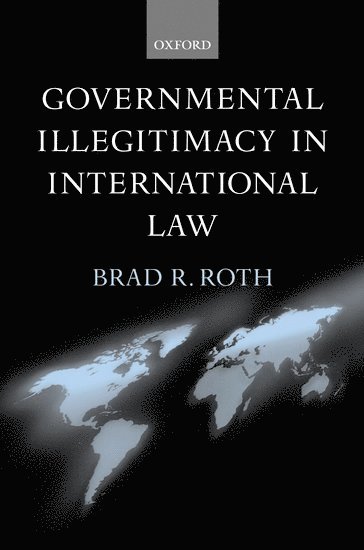



Mer från samma författare
Flyover Church: How Jesus' Ministry in Rural Places Is Good News Everywhere
Brad Roth
Häftad, 2024
329 kr
Hoppa över listan





Du kanske också är intresserad av
Flyover Church: How Jesus' Ministry in Rural Places Is Good News Everywhere
Brad Roth
Häftad, 2024
329 kr
- Nyhet
Del 6
Del 7
- Nyhet
Del 4
- Nyhet
Del 1
Del 3