
Del i serien Oñati International Series in Law and Society
Socio-Politics of Legal Design and its Epistemic Consequences
Inbunden, Engelska, 2026
1 509 kr
Beställningsvara. Skickas inom 10-15 vardagar. Fri frakt för medlemmar vid köp för minst 249 kr.
This book brings together diverse perspectives from researchers working in the fields of law, justice, and design to interrogate the emergence of vocabularies and methods of legal design and unpack their epistemic consequences.Legal design has emerged in the last decade as an interdisciplinary practice, at the intersection of law and justice, and initially human-centred design. Despite the short history of legal design as a discipline, its foundations in human-centred design have been questioned. Justifying all sorts of innovation for the universal needs of users is even more problematic for human-centred design due to its large adoption in industry and the public sector. Placing a market type of human-consumer at the centre of the legal design activity justifies the reproduction of capitalist and oppressive systems by placing the inspiration for new products and services on the human-user-consumer. The adoption of such practices in policy and legal design can be seen as a tool to impose the market values over democracy, justice, and equality.This book offers a wide array of alternatives and reference points for making sense of legal design. It critically addresses issues of epistemic injustice in the designing of legal services and systems, bringing together the tradition of socio-legal studies in dialogue with new concepts and frameworks from critical design approaches.
Produktinformation
- Utgivningsdatum2026-06-25
- Mått160 x 236 x 24 mm
- Vikt640 g
- FormatInbunden
- SpråkEngelska
- SerieOñati International Series in Law and Society
- Antal sidor320
- FörlagBloomsbury Publishing PLC
- ISBN9781509990061
Tillhör följande kategorier
Hoppa över listan








Mer från samma författare
Technology, Innovation and Access to Justice
Siddharth Peter de Souza, Maximilian Spohr
Inbunden, 2021
2 609 kr
Technology, Innovation and Access to Justice
Siddharth Peter de Souza, Maximilian Spohr
Häftad, 2023
709 kr
Transgressive Tech
Linnet Taylor, Aaron Martin, Siddharth Peter de Souza, Joan López Solano, Ouejdane Sabbah, Franklyn Ohai
Inbunden, 2026
3 229 kr
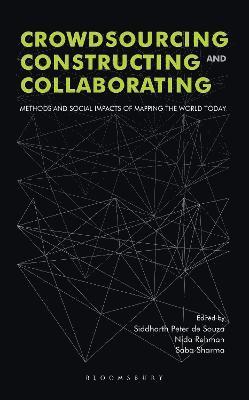
Crowdsourcing, Constructing and Collaborating
Siddharth Peter de Souza, Nida Rehman, Saba Sharma
Inbunden, 2020
1 429 kr
Hoppa över listan









Mer från samma serie
Women’s Rights to Social Security and Social Protection
Beth Goldblatt, Lucie Lamarche
Häftad, 2017
919 kr
Delivering Family Justice in the 21st Century
Mavis Maclean, John Eekelaar, Benoit Bastard
Häftad, 2017
539 kr
Hoppa över listan
Du kanske också är intresserad av
Crowdsourcing, Constructing and Collaborating
Siddharth Peter de Souza, Nida Rehman, Saba Sharma
Inbunden, 2020
1 429 kr
Technology, Innovation and Access to Justice
Siddharth Peter de Souza, Maximilian Spohr
Inbunden, 2021
2 609 kr
Technology, Innovation and Access to Justice
Siddharth Peter de Souza, Maximilian Spohr
Häftad, 2023
709 kr
Transgressive Tech
Linnet Taylor, Aaron Martin, Siddharth Peter de Souza, Joan López Solano, Ouejdane Sabbah, Franklyn Ohai
Inbunden, 2026
3 229 kr