
Del i serien Routledge Research on Gender in Asia Series
Social Transformation in Post-conflict Nepal
A Gender Perspective
Inbunden, Engelska, 2016
3 219 kr
Beställningsvara. Skickas inom 10-15 vardagar. Fri frakt för medlemmar vid köp för minst 249 kr.
Finns i fler format (1)
The concept of social transformation has been increasingly used to study significant political, socio-economic and cultural changes affected by individuals and groups. This book uses a novel approach from the gender perspective and from bottom up to analyse social transformation in Nepal, a country with a complex traditional structure of caste, class, ethnicity, religion and regional locality and the experience of the ten-year of People’s War (1996-2006).Through extensive interviews with women in post-conflict Nepal, this book analyses the intended and unintended impacts of conflict and traces the transformations in women’s understandings of themselves and their positions in public life. It raises important questions for the international community about the inevitable victimization of women during mass violence, but it also identifies positive impacts of armed conflict. The book also discusses how the Maoist insurgency had empowering effects on women.The first study to provide empirical evidence on the relationship between armed conflict and social transformation from gender’s perspectives, this book is a major contribution to the field of transitional justice and peacebuilding in post-armed-conflict Nepal. It is of interest to academics researching South Asia, Gender, Peace and Conflict Studies and Development Studies.
Produktinformation
- Utgivningsdatum2016-05-12
- Mått156 x 234 x 16 mm
- Vikt408 g
- FormatInbunden
- SpråkEngelska
- SerieRoutledge Research on Gender in Asia Series
- Antal sidor181
- FörlagTaylor & Francis Ltd
- ISBN9781138955813
Tillhör följande kategorier
Hoppa över listan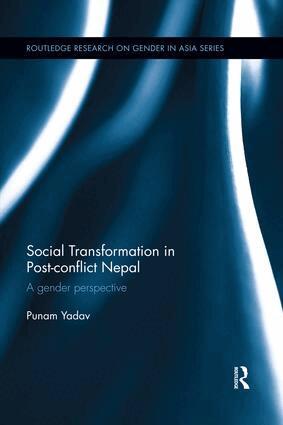








Du kanske också är intresserad av
- Nyhet
Del 4
Del 1
Del 3
Del 2
- Nyhet
Del 6
Del 7
- Nyhet
Del 11
- Nyhet