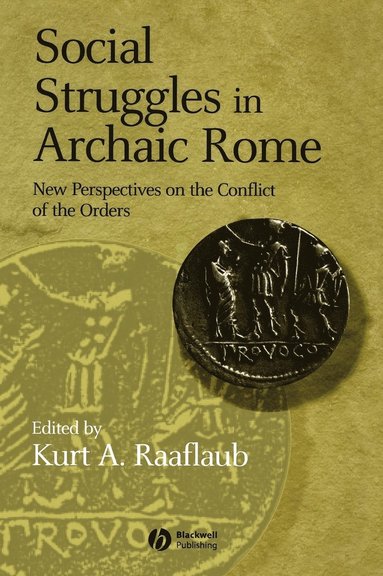
This widely respected study of social conflicts between the patrician elite and the plebeians in the first centuries of the Roman republic has now been enhanced by a new chapter on material culture, updates to individual chapters, an updated bibliography, and a new introduction. Analyzes social conflicts between patricians and plebeians in early republican RomeIncludes chapters by leading scholars from both sides of the Atlantic illuminating social, economic, legal, religious, military, and political aspects as well as the reliability of historical sourcesContributors have written addenda for the new edition, updating their chapters in light of recent scholarship
Kurt A. Raaflaub is David Herlihy University Professor and Professor of Classics and History at Brown University. His recent publications include Origins of Democracy in Ancient Greece (co-authored, 2006), The Discovery of Freedom in Ancient Greece (2004), War and Society in the Ancient and Medieval Worlds (co-edited, 1999), and Democracy, Empire, and the Arts in Fifth-Century Athens (co-edited, 1998).
Notes on Contributors viiEditor's Preface to the second edition ixEditor's Preface to the first edition xviiChronological Table xxvAbbreviations xxviiI The Conflict of the Orders in Archaic Rome A Comprehensive and Comparative Approach 1Kurt A. RaaflaubII The Value of the Literary Tradition Concerning Archaic Rome 47Timothy J. CornellIII The Formation of the “Annalistic Tradition” The Example of the Decemvirate 75Jürgen von Ungern-SternbergIV The Contribution of Archaeology to Early Roman History 98Russell T. ScottV Patricians and Plebeians The Origins of a Social Dichotomy 107Jean-Claude RichardVI The Definition of patres and plebs An End to the Struggle of the Orders 128Richard E. MitchellVII The Rise of the plebs in the Archaic Age of Rome 168Arnaldo MomiglianoVIII From Protection and Defense to Offense and Participation Stages in the Conflict of the Orders 185Kurt A. RaaflaubIX Religious Aspects of the Conflict of the Orders 223The Case of confarreatio Jerzy LinderskiX The Political Significance of the Codification of Law in Archaic Societies 239An Unconventional Hypothesis Walter EderXI The Tenth Table and the Conflict of the Orders 268Mark ToherXII The Integration of the Plebians into the Political Order after 366 bc 293Robert DevelinXIII The End of the Conflict of the Orders 312Jürgen von Ungern-SternbergBibliography 333Index of Subjects 386Index of Persons and Places 397Index of Scholars 404Index of Sources 408
"A path-breaking collection of articles and a model of collaborative enterprise when it first appeared, Social Struggles has long been essential reading for students and scholars alike of the Republic’s early history. Its re-publication in an expanded second edition is to be warmly welcomed. Quite simply, it is the best introduction available in any language to the complexities of this poorly understood but crucial period in Rome’s rise to world power." Nathan Rosenstein, The Ohio State University "Raaflaub's collection of essays has since its appearance been a standard work of reference and guide to the complexities of early Rome. The alternative views expressed on key issues make this a rich and rewarding account. Now updated, Social Struggles in Ancient Rome will once again define the future course of research in the field." Christopher J Smith, University of St Andrews “Raaflaub’s revised publication should continue to stimulate debate regarding Rome’s social, political and religious organization in the first centuries of the Republic.”Scholia Reviews
Raaflaub, Kurt A. Raaflaub, Hans van Wees, USA) Raaflaub, Kurt A. (Brown University, UK) van Wees, Hans (University College, London, Hans Van Wees, Kurt A Raaflaub, Hans Van Wees
Johann P. Arnason, Kurt A. Raaflaub, Australia) Arnason, Johann P. (La Trobe University, USA) Raaflaub, Kurt A. (Brown University, Johann P Arnason, Kurt A Raaflaub