
Del i serien SUNY series in Constructive Postmodern Thought
Social Self in Zen and American Pragmatism
Häftad, Engelska, 1996
639 kr
Beställningsvara. Skickas inom 5-8 vardagar. Fri frakt för medlemmar vid köp för minst 249 kr.
The first book on East-West comparative thought to critically analyze the Zen Buddhist model of self in modern Japanese philosophy from the standpoint of American pragmatismThe thesis of this work is that in both modern Japanese philosophy and American pragmatism there has been a paradigm shift from a monological concept of self as an isolated "I" to a dialogical concept of the social self as an "I-Thou relation," including a communication model of self as an individual-society interaction. It is also shown that for both traditions all aesthetic, moral, and religious values are a function of the social self arising through communicative interaction between the individual and society. However, at the same time this work critically examines major ideological conflicts arising between the social self theories of modern Japanese philosophy and American pragmatism with respect to such problems as individualism versus collectivism, freedom versus determinism, liberalism versus communitarianism, and relativism versus objectivism.
Produktinformation
- Utgivningsdatum1996-01-10
- Mått152 x 229 x 29 mm
- Vikt735 g
- FormatHäftad
- SpråkEngelska
- SerieSUNY series in Constructive Postmodern Thought
- Antal sidor482
- FörlagState University of New York Press
- ISBN9780791424926
Tillhör följande kategorier
Hoppa över listan


Mer från samma författare
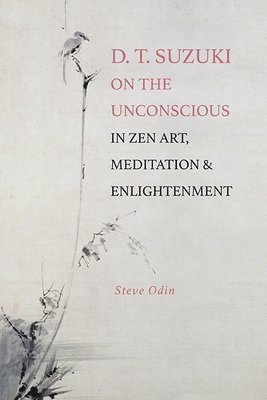
D. T. Suzuki on the Unconscious in Zen Art, Meditation, and Enlightenment
Steve Odin
Häftad, 2026
639 kr
D. T. Suzuki on the Unconscious in Zen Art, Meditation, and Enlightenment
Steve Odin
Inbunden, 2025
1 719 kr
Hoppa över listan








Mer från samma serie
Varieties of Postmodern Theology
David Ray Griffin, William A. Beardslee, Joe Holland
Häftad, 1989
579 kr
Hoppa över listan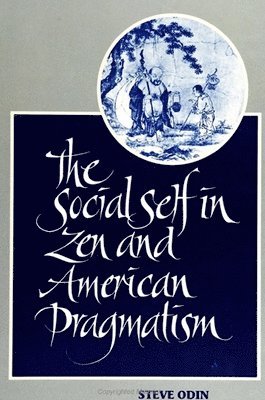




Du kanske också är intresserad av
D. T. Suzuki on the Unconscious in Zen Art, Meditation, and Enlightenment
Steve Odin
Inbunden, 2025
1 719 kr
D. T. Suzuki on the Unconscious in Zen Art, Meditation, and Enlightenment
Steve Odin
Häftad, 2026
639 kr