
Del i serien NIU Series in Orthodox Christian Studies
Slavic Letters of St. Jerome
The History of the Legend and Its Legacy, or, How the Translator of the Vulgate Became an Apostle of the Slavs
Inbunden, Engelska, 2014
889 kr
Beställningsvara. Skickas inom 10-15 vardagar. Fri frakt för medlemmar vid köp för minst 249 kr.
The Slavic Letters of St. Jerome is the first book-length study of the medieval legend that Church Father and biblical translator St. Jerome was a Slav who invented the Slavic (Glagolitic) alphabet and Roman Slavonic rite. Julia Verkholantsev locates the roots of this belief among the Latin clergy in Dalmatia in the 13th century and describes in fascinating detail how Slavic leaders subsequently appropriated it to further their own political agendas. The Slavic language, written in Jerome's alphabet and endorsed by his authority, gained the unique privilege in the Western Church of being the only language other than Latin, Greek, and Hebrew acceptable for use in the liturgy. Such privilege, confirmed repeatedly by the popes, resulted in the creation of narratives about the distinguished historical mission of the Slavs and became a possible means for bridging the divide between the Orthodox and Catholic Churches in the Slavic-speaking lands. In the fourteenth century the legend spread from Dalmatia to Bohemia and Poland, where Glagolitic monasteries were established to honor the Apostle of the Slavs Jerome and the rite and letters he created. The myth of Jerome's apostolate among the Slavs gained many supporters among the learned and spread far and wide, reaching Italy, Spain, Switzerland, and England. Grounded in extensive archival research, Verkholantsev examines the sources and trajectory of the legend of Jerome's Slavic fellowship within a wider context of European historical and theological thought. This unique volume will appeal to medievalists, Slavicists, scholars of religion, those interested in saints' cults, and specialists of philology.
Produktinformation
- Utgivningsdatum2014-09-30
- Mått178 x 254 x 24 mm
- Vikt907 g
- FormatInbunden
- SpråkEngelska
- SerieNIU Series in Orthodox Christian Studies
- Antal sidor280
- FörlagCornell University Press
- ISBN9780875804859
- UtmärkelserWinner of Early Slavic Studies Association Book Prize 2015 (United States)
Tillhör följande kategorier
Hoppa över listan
Mer från samma serie
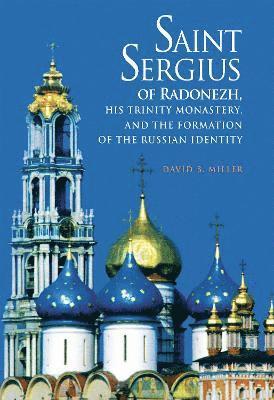
Saint Sergius of Radonezh, His Trinity Monastery, and the Formation of the Russian Identity
David B. Miller
Inbunden, 2010
799 kr
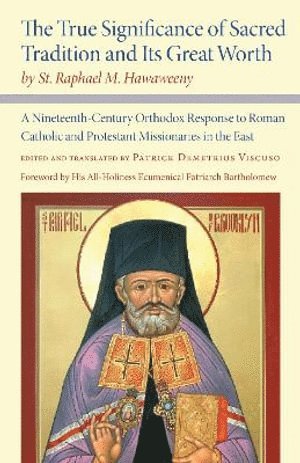
True Significance of Sacred Tradition and Its Great Worth, by St. Raphael M. Hawaweeny
St. Raphael M. Hawaweeny, Patrick Demetrios Viscuso
Inbunden, 2017
989 kr
Hoppa över listan




Du kanske också är intresserad av
True Significance of Sacred Tradition and Its Great Worth, by St. Raphael M. Hawaweeny
St. Raphael M. Hawaweeny, Patrick Demetrios Viscuso
Inbunden, 2017
989 kr
- Nyhet
Saint Sergius of Radonezh, His Trinity Monastery, and the Formation of the Russian Identity
David B. Miller
Inbunden, 2010
799 kr
- Nyhet