
Del 69
Del 42 i serien Cambridge Studies in Biological and Evolutionary Anthropology
Simulating Human Origins and Evolution
Inbunden, Engelska, 2005
2 779 kr
Beställningsvara. Skickas inom 5-8 vardagar. Fri frakt för medlemmar vid köp för minst 249 kr.
Finns i fler format (1)
The development of populations over time, and, on longer timescales, the evolution of species, are both influenced by a complex of interacting, underlying processes. Computer simulation provides a means of experimenting within an idealised framework to allow aspects of these processes and their interactions to be isolated, controlled, and understood. In this book, computer simulation is used to model migration, extinction, fossilisation, interbreeding, selection and non-hereditary effects in the context of human populations and the observed distribution of fossil and current hominoid species. The simulations described enable the visualisation and study of lineages, genetic diversity in populations, character diversity across species and the accuracy of reconstructions, allowing insights into human evolution and the origins of humankind for graduate students and researchers in the fields of physical anthropology, human evolution, and human genetics.
Produktinformation
- Utgivningsdatum2005-04-14
- Mått152 x 229 x 16 mm
- Vikt520 g
- FormatInbunden
- SpråkEngelska
- SerieCambridge Studies in Biological and Evolutionary Anthropology
- Antal sidor258
- FörlagCambridge University Press
- ISBN9780521843997
Tillhör följande kategorier
Hoppa över listan


Mer från samma serie
Del 22
Del 16
Human Energetics in Biological Anthropology
Stanley J. Ulijaszek, C. G. Nicholas Mascie-Taylor, R. A. Foley
Häftad, 2005
809 kr
Del 15
Del 32
Del 6
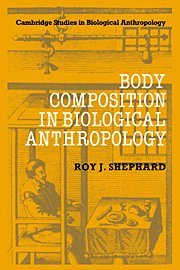
Body Composition in Biological Anthropology
Roy J. Shephard, C. G. Nicholas Mascie-Taylor
Häftad, 2005
1 149 kr
Del 13
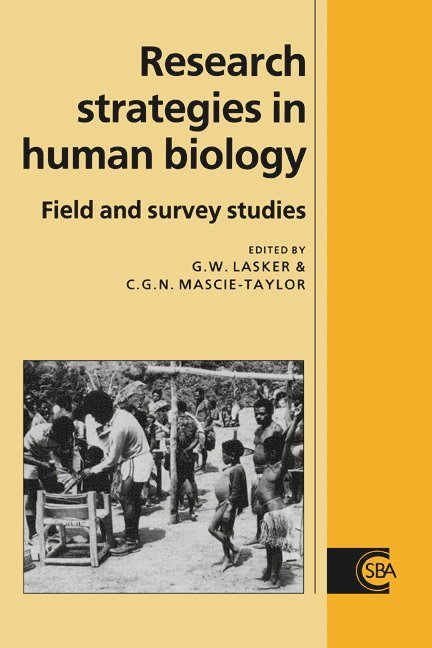
Research Strategies in Human Biology
Gabriel Ward Lasker, C. G. Nicholas Mascie-Taylor
Häftad, 2005
959 kr
Del 29
Del 8
Applications of Biological Anthropology to Human Affairs
C. G. Nicholas Mascie-Taylor, Gabriel W. Lasker
Häftad, 2005
869 kr
Del 24
Migration and Colonization in Human Microevolution
Alan G. Fix, C. G. Nicholas Mascie-Taylor
Häftad, 2005
909 kr
Hoppa över listan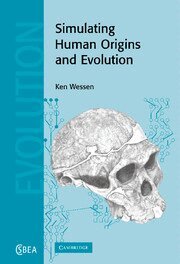
Du kanske också är intresserad av
Del 42
Del 13
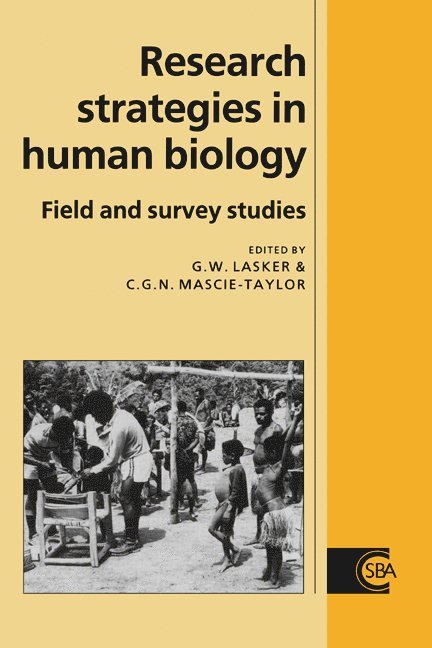
Research Strategies in Human Biology
G. Ed Lasker, Gabriel Ward Lasker, C. G. Nicholas Mascie-Taylor
Inbunden, 1993
2 189 kr
Del 16
Human Energetics in Biological Anthropology
Stanley J. Ulijaszek, C. G. Nicholas Mascie-Taylor, R. A. Foley
Häftad, 2005
809 kr
Del 1
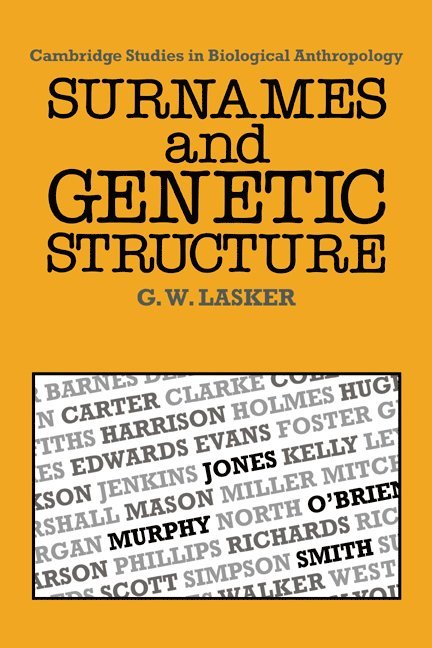
Surnames and Genetic Structure
Gabriel Ward Lasker, C. G. Nicholas Mascie-Taylor, R. A. Foley
Inbunden, 1985
1 679 kr
Del 19
Del 8
Applications of Biological Anthropology to Human Affairs
C. G. Nicholas Mascie-Taylor, Gabriel W. Lasker
Häftad, 2005
869 kr
Del 38
Molecular Biology and Human Diversity
Anthony J. Boyce, C. G. Nicholas Mascie-Taylor
Häftad, 2005
1 159 kr
Del 59
Del 59
Del 19
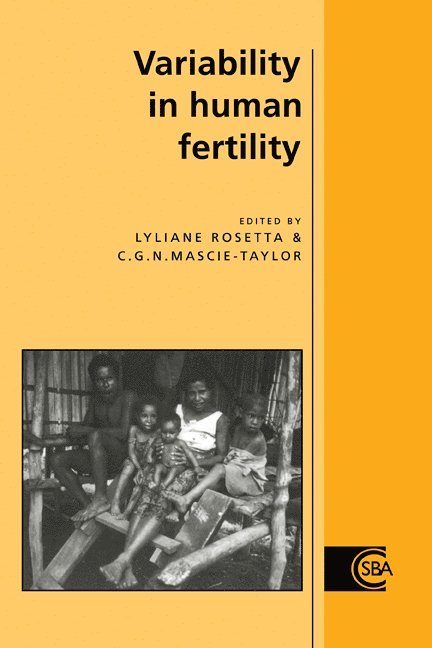
Variability in Human Fertility
Lyliane Rosetta, L. Rosetta, Lyliane Rosetta, C. G. Nicholas Mascie-Taylor
Inbunden, 1996
1 919 kr