
Del i serien SUNY series in Urban Public Policy
Shutdown at Youngstown
Public Policy for Mass Unemployment
Inbunden, Engelska, 1983
1 459 kr
Tillfälligt slut
In spite of the gravity of the problem of mass unemployment and its periodic recurrence in industrial societies, few scientific studies have been undertaken which serve to define the impact of plant closings on workers, families, and the community; to evaluate individual group, or community responses to closings; and to offer suggestions for the future.Shutdown at Youngstown meets this need. It presents the findings of a multidisciplinary, scientific study of the closing of the steel mills in Youngstown in 1977 which put 5,000 persons out of work. Research reported in the text is based on personal interviews, social indicator data, and data from health and human service agencies. The authors conclude by developing a public policy for dealing with plant closings and the crisis of mass unemployment.
Produktinformation
- Utgivningsdatum1983-06-30
- Mått152 x 229 x undefined mm
- Vikt476 g
- FormatInbunden
- SpråkEngelska
- SerieSUNY series in Urban Public Policy
- Antal sidor236
- FörlagState University of New York Press
- ISBN9780873956468
Tillhör följande kategorier
Hoppa över listan





Mer från samma författare
Modernizing Democracy: Innovations in Citizen Participation
Terry F. Buss, F Stevens Redburn, Kristina Guo
Inbunden, 2006
3 209 kr
Modernizing Democracy: Innovations in Citizen Participation
Terry F. Buss, F Stevens Redburn, Kristina Guo
Häftad, 2006
959 kr
Transforming Public Leadership for the 21st Century
Ricardo S. Morse, Terry F. Buss, C. Morgan Kinghorn
Inbunden, 2007
3 509 kr
Transforming Public Leadership for the 21st Century
Ricardo S. Morse, Terry F. Buss, C. Morgan Kinghorn
Häftad, 2008
959 kr
Foreign Aid and Foreign Policy
Louis A. Picard, Robert Groelsema, Terry F. Buss
Inbunden, 2007
3 209 kr
Hoppa över listan





Mer från samma serie
Gentrification, Displacement, and Neighborhood Revitalization
J. John Palen, Bruce London
Häftad, 1985
589 kr
Hoppa över listan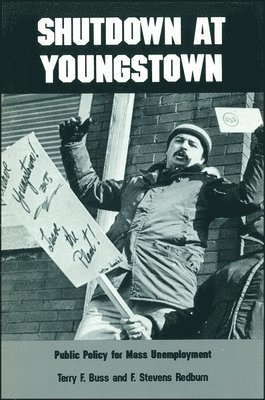

Du kanske också är intresserad av
Performance Management and Budgeting
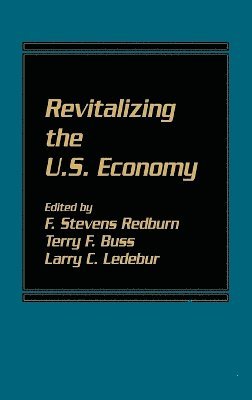
F Stevens Redburn, Robert J. Shea, Terry F. Buss, David M. Walker
Häftad, 2007
1 149 kr
Modernizing Democracy: Innovations in Citizen Participation
Terry F. Buss, F Stevens Redburn, Kristina Guo
Inbunden, 2006
3 209 kr
Modernizing Democracy: Innovations in Citizen Participation
Terry F. Buss, F Stevens Redburn, Kristina Guo
Häftad, 2006
959 kr
Performance Management and Budgeting
F Stevens Redburn, Robert J. Shea, Terry F. Buss, David M. Walker
Inbunden, 2008
3 509 kr
Del 48
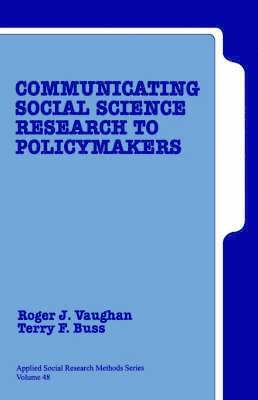
Communicating Social Science Research to Policy Makers
Roger D. Vaughan, Terry F. Buss
Häftad, 1998
1 909 kr