
Del i serien Routledge Science and Religion Series
Seven Classical Perspectives for Islam and Science
Inbunden, Engelska, 2026
3 279 kr
Beställningsvara. Skickas inom 10-15 vardagar. Fri frakt för medlemmar vid köp för minst 249 kr.
This book examines how seven major classical Islamic thinkers, from Abū Manṣūr al-Māturīdī to Taqī al-Dīn Ibn Taymiyya, developed distinctive metaphysical and theological worldviews that continue to shape how Muslims might engage questions of science and religion today. Each thinker represents a unique school within the broader Islamic intellectual tradition, from the rationalism of the Muʿtazilīs and the philosophical vision of Ibn Sīnā to the mystical cosmology of Ibn ʿArabī and the realist theology of Ibn Taymiyya. Through a shared analytic framework, the chapters present how these figures understood God, causality, nature, chance, miracles, and human uniqueness, highlighting their enduring insights and divergences. The result is a coherent and accessible comparative study that bridges classical kalām, falsafa, and Sufism with contemporary discussions in science and theology. This volume is written for researchers, educators, and students of theology, philosophy, and science and religion, and for anyone seeking to understand how classical Islamic thought can offer fresh resources for engaging contemporary science.The Open Access version of this book, available at http://www.taylorfrancis.com, has been made available under a Creative Commons Attribution-Non Commercial-No Derivatives (CC BY-NC-ND) 4.0 license.
Produktinformation
- Utgivningsdatum2026-04-09
- Mått156 x 234 x 19 mm
- Vikt770 g
- FormatInbunden
- SpråkEngelska
- SerieRoutledge Science and Religion Series
- Antal sidor318
- FörlagTaylor & Francis Ltd
- ISBN9781032009858
Tillhör följande kategorier
Hoppa över listan
Mer från samma författare
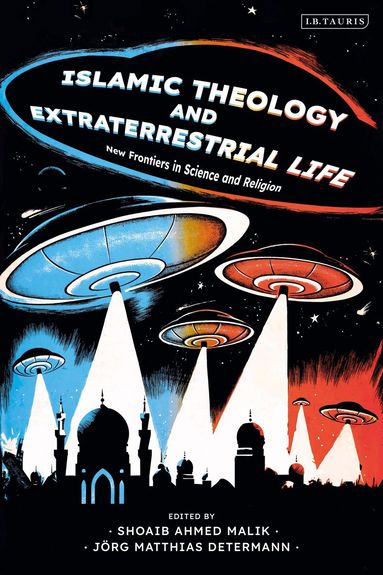
Islamic Theology and Extraterrestrial Life
Jörg Matthias Determann, Jörg Matthias Determann, Shoaib Ahmed Malik
Inbunden, 2024
1 839 kr
Islamic Theology and Extraterrestrial Life
Jörg Matthias Determann, Shoaib Ahmed Malik
Häftad, 2025
539 kr
Hoppa över listan
Mer från samma serie
Intersections of Religion and Astronomy
Aaron Ricker, Chris Corbally, Darry Dinell
Inbunden, 2020
3 249 kr
Interreligious Perspectives on Mind, Genes and the Self
Joseph Tham, Chris Durante, Alberto García Gómez
Häftad, 2020
919 kr
Hoppa över listan

Du kanske också är intresserad av
Islamic Theology and Extraterrestrial Life
Jörg Matthias Determann, Jörg Matthias Determann, Shoaib Ahmed Malik
Inbunden, 2024
1 839 kr
Islamic Theology and Extraterrestrial Life
Jörg Matthias Determann, Shoaib Ahmed Malik
Häftad, 2025
539 kr
- Nyhet
Del 3
- Nyhet
- Nyhet
Del 6