
Del i serien Landscapes of Education
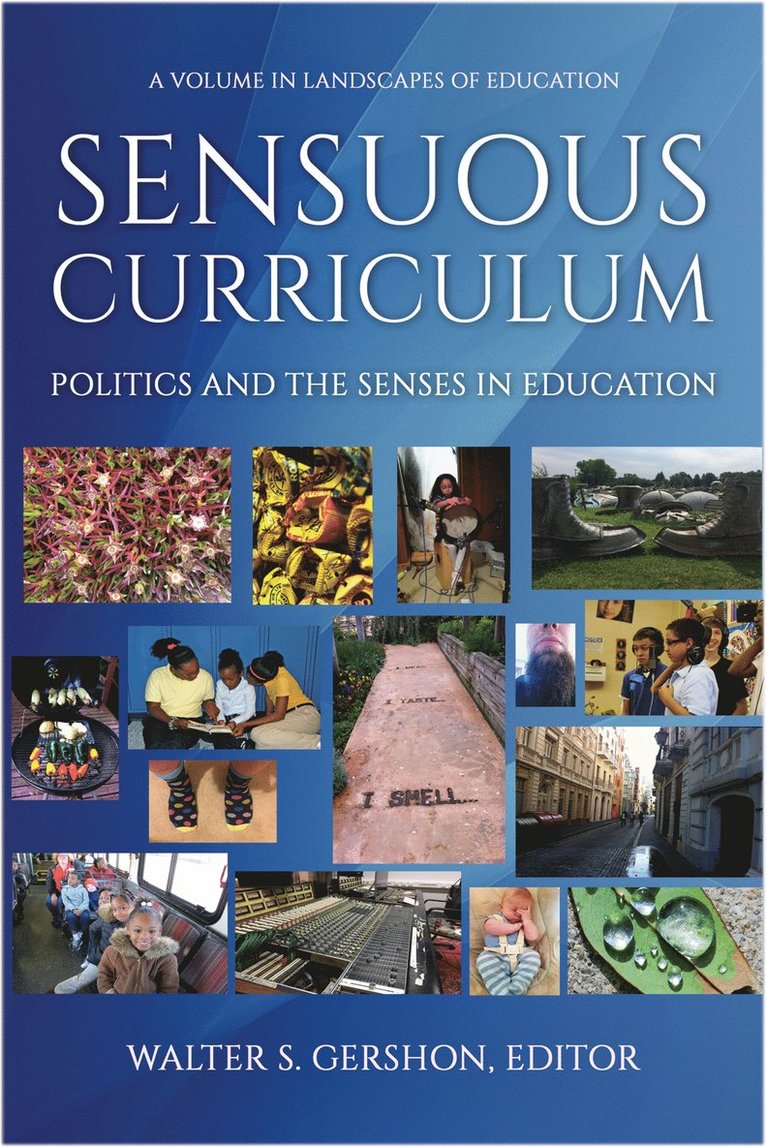
Sensuous Curriculum
Politics and the Senses in Education
Häftad, Engelska, 2019
709 kr
Beställningsvara. Skickas inom 5-8 vardagar. Fri frakt för medlemmar vid köp för minst 249 kr.
The sensuous is the human experience, unfolding our everyday experiences and articulating our affects. Without sensory information, we could neither know nor be. This is because we gain information through our senses and interpret that information as perceptions, the sociocultural frames used to analyze that input. This is the case regardless of how a sensorium is constructed, a more limited Western five senses model for example. It is also the case no matter how senses are defined, they ways they are expressed, or the ways in which they are understood to function. Further, because there are often greater differences between members within a particular group than divergences between groups, how one attends to and acts in light of sensory information is always a polyphonic tapestry constructed on the warp of the sociocultural and the weft of individualism. Education, the transfer of information between people, animals, things, and ecologies, is therefore a sensory endeavor.Sensuous curriculum is one means of describing this deeply layered intersection of educational ways of being and knowing. In many ways inverting how questions of curriculum are often framed, Sensuous Curriculum: Politics and the Senses in Education foregrounds how sensory understandings are forms of educational, relational politics. Bringing the depth and complexity of sensory studies firmly into curriculum and foundational studies of education, contributors to this volume address this educational and political intersection from a wide variety of theoretical and practical perspectives that are always embodied and material. Approached in an academic yet accessible manner, Sensuous Curriculum addresses key questions about what it means to educate and the ideas and ideals render those understandings sensible. This variety, depth, and accessibility combine to make Sensuous Curriculum an important resource for those interested in critical studies of the senses in educational ecologies and holistic education. It is a text as at home in theory and methods doctoral courses as it is in undergraduate courses for preservice teachers and will be of interest to those searching for rich ways to conceptualize education outside of a standards-centric perspective.
Produktinformation
- Utgivningsdatum2019-05-13
- Mått156 x 234 x 12 mm
- Vikt316 g
- FormatHäftad
- SpråkEngelska
- SerieLandscapes of Education
- Antal sidor220
- FörlagEmerald Publishing Inc
- ISBN9781641135818
Tillhör följande kategorier
Hoppa över listan
Du kanske också är intresserad av
Mandy Hoffen and a Conspiracy to Resurrect Life and Social Justice in Science Curriculum with Henrietta Lacks
Dana Compton McCullough
Inbunden, 2021
1 459 kr