
Scramble for the Skies
The Great Power Competition to Control the Resources of Outer Space
Häftad, Engelska, 2022
709 kr
Beställningsvara. Skickas inom 10-15 vardagar. Fri frakt för medlemmar vid köp för minst 249 kr.
Finns i fler format (1)
With a focus on China, the United States, and India, this book examines the economic ambitions of the second space race. The authors argue that space ambitions are informed by a combination of factors, including available resources, capability, elite preferences, and talent pool. The authors demonstrate how these influences affect the development of national space programs as well as policy and law.
Produktinformation
- Utgivningsdatum2022-05-09
- Mått157 x 227 x 24 mm
- Vikt608 g
- FormatHäftad
- SpråkEngelska
- Antal sidor464
- FörlagBloomsbury Publishing Plc
- ISBN9781498583138
Tillhör följande kategorier
Hoppa över listan
Mer från samma författare
Just War Theory and the India's Intervention in East Pakistan, 1971
Namrata Goswami
Häftad, 2014
709 kr
Hoppa över listan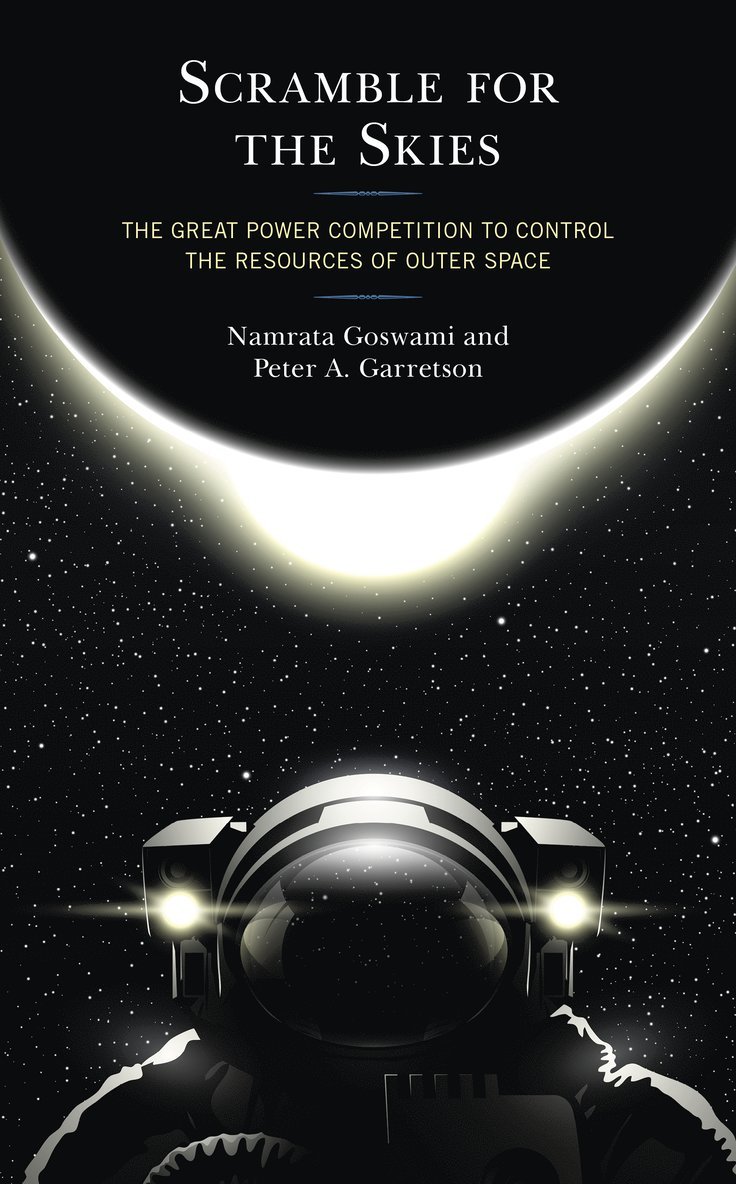




Du kanske också är intresserad av
Just War Theory and the India's Intervention in East Pakistan, 1971
Namrata Goswami
Häftad, 2014
709 kr
- Nyhet
Del 3
- Nyhet
Del 11
- Nyhet
Del 6