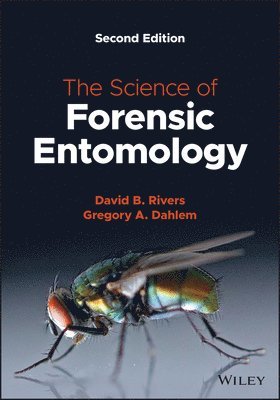
Science of Forensic Entomology
Inbunden, Engelska, 2014
Av David B. Rivers, Gregory A. Dahlem, USA) Rivers, David B. (Loyola University Maryland, MD, USA) Dahlem, Gregory A. (Northern Kentucky University, KY
1 569 kr
Tillfälligt slut
Finns i fler format (1)
The Science of Forensic Entomology builds a foundation of biological and entomological knowledge that equips the student to be able to understand and resolve questions concerning the presence of specific insects at a crime scene, in which the answers require deductive reasoning, seasoned observation, reconstruction and experimentation—features required of all disciplines that have hypothesis testing at its core. Each chapter addresses topics that delve into the underlying biological principles and concepts relevant to the insect biology that forms the bases for using insects in matters of legal importance.The book is more than an introduction to forensic entomology as it offers in depth coverage of non-traditional topics, including the biology of maggot masses, temperature tolerances of necrophagous insects; chemical attraction and communication; reproductive strategies of necrophagous flies; archaeoentomology, and use of insects in modern warfare (terrorism). As such it will enable advanced undergraduate and postgraduate students the opportunity to gain a sound knowledge of the principles, concepts and methodologies necessary to use insects and other arthropods in a wide range of legal matters.
Produktinformation
- Utgivningsdatum2014-01-31
- Mått191 x 249 x 24 mm
- Vikt1 007 g
- FormatInbunden
- SpråkEngelska
- Antal sidor400
- FörlagJohn Wiley and Sons Ltd
- ISBN9781119940364
Tillhör följande kategorier
David B Rivers, Loyola University Maryland, Maryland, USAGregory Dahlem, Northern Kentucky University, Kentucky, USA
- About the companion website xiiPreface xiiiChapter 1 Role of forensic science in criminal investigations 1Overview 1The big picture 11.1 What is forensic science? 11.2 Application of science to criminal investigations 31.3 Recognized specialty disciplines in forensic science 9Chapter review 10Test your understanding 11Notes 12References cited 12Supplemental reading 12Additional resources 12Chapter 2 History of forensic entomology 13Overview 13The big picture 132.1 Historical records of early human civilizations suggest understanding of insect biology and ecology 132.2 Early influences leading to forensic entomology 162.3 Foundation for discipline is laid through casework, research, war, and public policy 182.4 Turn of the twentieth century brings advances in understanding of necrophagous insects 212.5 Forensic entomology during the “great” wars 222.6 Growth of the discipline due to the pioneering efforts of modern forensic entomologists leads to acceptance by judicial systems and public 23Chapter review 24Test your understanding 26Notes 26References cited 26Supplemental reading 27Additional resources 27Chapter 3 Role of insects and other arthropods in urban and stored product entomology 29Overview 29The big picture 293.1 Insects and other arthropods are used in civil, criminal, and administrative matters pertinent to the judicial system 293.2 Civil cases involve disputes over private issues 313.3 Criminal law involves more serious matters involving safety and welfare of people 313.4 Administrative law is concerned with rulemaking, adjudication, or enforcement of specific regulatory agendas 323.5 Stored product entomology addresses issues of both a civil and criminal nature 333.6 Urban entomology is focused on more than just “urban” issues 38Chapter review 42Test your understanding 44Notes 45References cited 45Supplemental reading 46Additional resources 46Chapter 4 Introduction to entomology 47Overview 47The big picture 474.1 Insecta is the biggest class of the biggest phylum of living organisms, the Arthropoda 474.2 The typical adult insect has three body parts, six legs, two antennae, compound eyes, external mouthparts, and wings 504.3 Tagmosis has produced the three functional body segments of insects: the head, thorax, and abdomen 514.4 Sensory organs and their modifications allow insects to perceive and react to their environments 554.5 The structure and function of an insect’s digestive system is intimately tied to the food that it prefers to eat 574.6 A tubular tracheal system transports oxygen to the body’s cells while blood moves through the body without the aid of a vascular system 584.7 The nervous system of insects integrates sensory input and drives many aspects of behavior 604.8 In order to grow, insects need to shed their “skin” 614.9 Many insects look and behave entirely differently as a larva than as an adult – the magic of metamorphosis 614.10 The desire to reproduce is a driving force for unique reproductive behaviors and copulatory structures in insects 62Chapter review 64Test your understanding 65References cited 66Supplemental reading 67Additional resources 67Chapter 5 Biology, taxonomy, and natural history of forensically important insects 69Overview 69The big picture 695.1 A variety of different insects and terrestrial arthropods are attracted to a dead body 695.2 The fauna of insects feeding on a body is determined by location, time, and associated organisms 715.3 Necrophagous insects include the taxa feeding on the corpse itself 725.4 Parasitoids and predators are the second most significant group of carrion-frequenting taxa 855.5 Omnivorous species include taxa which feed on both the corpse and associated arthropods 875.6 Adventitious species include taxa that use the corpse as an extension of their own natural habitat 89Chapter review 90Test your understanding 92References cited 92Supplemental reading 94Additional resources 94Chapter 6 Reproductive strategies of necrophagous flies 95Overview 95The big picture 956.1 The need to feed: anautogeny and income breeders are common among necrophagous Diptera 956.2 Size matters in egg production 986.3 Progeny deposition is a matter of competition 1006.4 Larvae are adapted for feeding and competing on carrion 1026.5 Feeding aggregations maximize utilization of food source 1036.6 Mother versus offspring: fitness conflicts 1046.7 Resource partitioning is the path to reproductive success 105Chapter review 106Test your understanding 108Notes 109References cited 109Supplemental reading 111Additional resources 112Chapter 7 Chemical attraction and communication 113Overview 113The big picture 1137.1 Insects rely on chemicals in intraspecific and interspecific communication 1137.2 Chemical communication requires efficient chemoreception 1147.3 Semiochemicals modify the behavior of the receiver 1157.4 Pheromones are used to communicate with members of the same species 1167.5 Allelochemicals promote communication across taxa 1187.6 Chemical attraction to carrion 1207.7 Chemical attraction to carrion by subsequent fauna 122Chapter review 124Test your understanding 127Notes 127References cited 127Supplemental reading 129Additional resources 130Chapter 8 Biology of the maggot mass 131Overview 131The big picture 1318.1 Carrion communities are composed largely of fly larvae living in aggregations 1318.2 Formation of maggot masses involves clustering duringoviposition or larviposition 1328.3 Larval feeding aggregations provide adaptive benefits to individuals 1348.4 Developing in maggot masses is not always beneficial to conspecifics or allospecifics 140Chapter review 143Test your understanding 145References cited 146Supplemental reading 149Additional resources 149Chapter 9 Temperature tolerances of necrophagous flies 151Overview 151The big picture 1519.1 Necrophagous insects face seasonal, aseasonal, and self-induced (heterothermy) temperature extremes 1529.2 Temperature challenges do not equal death: necrophagous insects are equipped with adaptations to survive a changing environment 1539.3 Life-history features that promote survival during proteotaxic stress 1549.4 Deleterious effects of high temperatures on necrophagous flies 1589.5 Life-history strategies and adaptations that promote survival at low temperatures 1609.6 Deleterious effects of low-temperature exposure 166Chapter review 167Test your understanding 170Notes 171References cited 171Supplemental reading 174Additional resources 174Chapter 10 Postmortem decomposition of human remains and vertebrate carrion 175Overview 175The big picture 17510.1 Decomposition of human and other vertebrate remains is a complex process 17510.2 Numerous factors affect the rate of body decomposition 17710.3 When the heart stops: changes occur almost immediately but are not outwardly detectable 17910.4 Body decomposition is characterized by stages of physical decay 184Chapter review 187Test your understanding 190Notes 190References cited 190Supplemental reading 192Additional resources 192Chapter 11 Insect succession on carrion under natural and artificial conditions 193Overview 193The big picture 19311.1 What’s normal about terrestrial decomposition? Typical patterns of insect succession on bodies above ground 19411.2 Succession patterns under forensic conditions are not typical 19611.3 Several factors serve as barriers to oviposition by necrophagous insects 19811.4 The physical conditions of carrion decay can function as a hurdle to insect development 20011.5 Insect faunal colonization of animal remains is influenced by conditions of physical decomposition 204Chapter review 208Test your understanding 211Notes 211References cited 212Supplemental reading 214Additional resources 214Chapter 12 Postmortem interval 215Overview 215The big picture 21512.1 The time since death is referred to as the postmortem interval 21512.2 The role of insects in estimating the PMI 21712.3 Modeling growth–temperature relationships 22012.4 Calculating the PMI requires experimental data on insect development and information from the crime scene 22212.5 The evolving PMI: changing approaches and sources of error 227Chapter review 230Test your understanding 232Notes 233References cited 233Supplemental reading 235Additional resources 235Chapter 13 Insect alterations of bloodstain evidence 237Overview 237The big picture 23713.1 Bloodstains are not always what they appear to be at the crime scene 23713.2 Science is the cornerstone of bloodstain pattern analyses 23813.3 Crash course in bloodstain analyses 24013.4 Insect activity can alter blood evidence 24313.5 Insect feeding activity on bloodstains or fresh blood can yield regurgitate spots or transference 24313.6 Digested blood is eliminated from insects as liquid feces or frass 24513.7 Parasitic insects can confound blood evidence by leaving spot artifacts 246Chapter review 246Test your understanding 248Notes 248References cited 249Supplemental reading 249Additional resources 250Chapter 14 Necrophagous and parasitic flies as indicators of neglect and abuse 251Overview 251The big picture 25114.1 Parasitic and necrophagous flies can infest humans, pets, and livestock 25214.2 Not all forensically important insects wait until death to feed 25314.3 Chemoattraction of flies to the living does not necessarily differ from the odors of death 25514.4 Necrophagous and parasitic flies display oviposition and development preferences on their vertebrate “hosts” 25714.5 Larval myiasis can be fatal 258Chapter review 261Test your understanding 263Notes 263References cited 264Supplemental reading 265Additional resources 266Chapter 15 Application of molecular methods to forensic entomology 267Overview 267The big picture 26715.1 Molecular methods: living things can be defined by their DNA 26715.2 Evidence collection: preserve DNA integrity 27015.3 Molecular methods of species identification 27015.4 DNA barcoding protocol 27515.5 Problems encountered in barcoding projects 27915.6 Gut content: victim and suspect identifications 28015.7 Molecular methods and population genetics 28115.8 Molecular methods: non-DNA based 28215.9 Validating molecular methods for use as evidence 28415.10 Future directions 284Chapter review 285Test your understanding 287References cited 288Supplemental reading 291Additional resources 292Chapter 16 Archaeoentomology: insects and archaeology 293Overview 293The big picture 29316.1 Archaeoentomology is a new “old” discipline 29316.2 Concepts and techniques from forensic entomology can be applied to archaeology 29516.3 Ancient insects and food: connection to stored product entomology 29616.4 Ancient insects as pests: beginnings of synanthropy and urban entomology 29816.5 Ancient insects and mummies: revelations about past lives and civilizations 30116.6 Forensic archaeoentomology: entomological investigations into extremely “cold” cases 304Chapter review 304Test your understanding 306Notes 307References cited 307Supplemental reading 309Additional resources 309Chapter 17 Insects as weapons of war and threats to national security 311Overview 311The big picture 31117.1 Terrorism and biological threats to national security are part of today’s world 31217.2 Entomological weapons are not new ideas 31417.3 Direct entomological threats to human populations are not all historical 31617.4 Impending entomological threats to agriculture and food safety 31817.5 Insect-borne diseases as new or renewed threats to human health 31917.6 Insects can be used as tools for national security 321Chapter review 324Test your understanding 327Notes 328References cited 328Supplemental reading 329Additional resources 329Chapter 18 Deadly insects 331Overview 331The big picture 33118.1 Insects that bite, sting or secrete cause fear, loathing, and death 33218.2 Insects that cause death 33318.3 Human envenomation and intoxication by insect-derived toxins 33818.4 Insects that injure humans rely on chemically diverse venoms and toxins 33818.5 Non-insect arthropods that should scare you! 34218.6 Implications of deadly insects for forensic entomology 345Chapter review 346Test your understanding 349Notes 349References cited 350Supplemental reading 351Additional resources 351Appendix I Collection and preservation of calyptrate Diptera 353Collecting adult flies 353Collecting fly larvae 355Mounting and preserving specimens (adult flies) 355References cited 357Resources and links 357Appendix II Getting specimens identified 359Morphological identification of specimens on your own 359Identification of specimens (by systematic expert) 360References cited 361Resources and links 361Appendix III Necrophagous fly life table references 363Glossary 367Index 377