Skickas . Fri frakt för medlemmar vid köp för minst 249 kr.
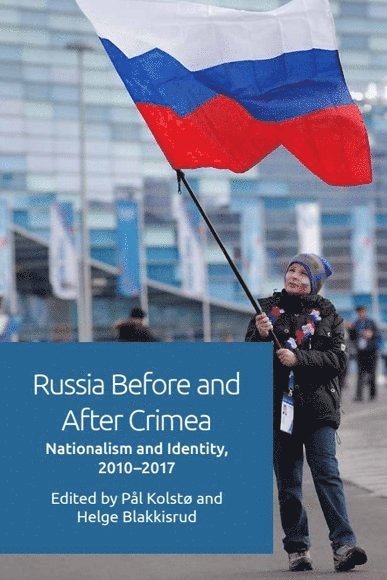
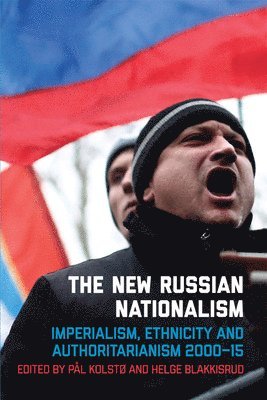
Russia’s annexation of Crimea in 2014 marked a watershed in post-Cold War European history and brought East–West relations to a low. At the same time, by selling this fateful action in starkly nationalist language, the Putin regime achieved record-high popularity. This book shows how, after the large-scale 2011–2013 anti-Putin demonstrations in major Russian cities and the parallel rise in xenophobia related to the Kremlin’s perceived inability to deal with the influx of Central Asian labour migrants, the annexation of Crimea generated strong ‘rallying around the nation’ and ‘rallying around the leader’ effects. The contributors to this collection go beyond the news headlines to focus on overlooked aspects of Russian society such as intellectual racism and growing xenophobia. These developments are contextualised with an overview of Russian nationalism: state-led, grassroots and the tensions between the two.
Pål Kolstø is Professor Emeritus of Russian and Post-Soviet Studies at the University of Oslo Helge Blakkisrud is Associate Professor of Russian Area Studies at the University of Oslo
List of figuresList of tablesNotes on contributors PrefaceIntroduction: Exploring Russian nationalismsPål Kolstø and Helge BlakkisrudPart I Official nationalism1. Contemporary Russian nationalism in the historical struggle between ‘official nationality’ and ‘popular sovereignty’Emil Pain2. Imperial and ethnic nationalism: A dilemma of the Russian eliteEduard Ponarin and Michael Komin3. Kremlin’s post-2012 national policies: Encountering the merits and perils of identity-based social contractYuri Teper4. Sovereignty and Russian national identity-making: The biopolitical dimension 129Andrey Makarychev and Alexandra YatsykPart II Radical and other societal nationalisms5. Revolutionary nationalism in Contemporary RussiaAlexandra Kuznetsova and Sergey Sergeev6. The Russian nationalist movement at low ebbAlexander Verkhovsky7. Ideologue of neo-Nazi terror: Aleksandr Sevastianov and Russia’s ‘partisan’ insurgencyRobert Horvath8. The extreme right fringe of Russian nationalism and the Ukraine conflict: The National Socialist InitiativeSofia TipaldouPart III Identities and otherings9. ‘Restore Moscow to the Muscovites’: Othering ‘the migrants’ in the 2013 Moscow mayoral electionsHelge Blakkisrud and Pål Kolstø10. Anti-migrant, but not nationalist: Pursuing statist legitimacy through immigration discourse and policyCaress Schenk11. Everyday patriotism and ethnicity in today’s RussiaJ. Paul Goode12. Identity in Crimea before annexation: A bottom-up perspectiveEleanor KnottIndex
Pål Kolstø, Helge Blakkisrud, University of Oslo) Kolstø, Pal (Professor of Russian and post-Soviet Studies, Norway) Blakkisrud, Helge (Associate Professor of Russian Studies, University of Oslo
Helge Blakkisrud, Pål Kolstø, Norway) Blakkisrud, Helge (Associate Professor of Russian Studies, University of Oslo, University of Oslo) Kolstø, Pal (Professor of Russian and post-Soviet Studies
Helge Blakkisrud, Pål Kolstø, Helge Blakkisrud, University of Oslo) Kolstø, Pal (Professor of Russian and post-Soviet Studies, Norway) Blakkisrud, Helge (Associate Professor of Russian Studies, University of Oslo