
Rule of Law and Governance in Indigenous Yoruba Society
A Study in African Philosophy of Law
Inbunden, Engelska, 2016
1 729 kr
Beställningsvara. Skickas inom 10-15 vardagar. Fri frakt för medlemmar vid köp för minst 249 kr.
In The Rule of Law and Governance in Indigenous Yoruba Society, John Ayotunde Isola Bewaji has two main goals. The first is to provide an exploration of aspects of indigenous Yoruba philosophy of law. The second is to relate this philosophy of law to the Yoruba indigenous traditions of governance, with a view to appreciating the relevance of the Yoruba traditions of law and governance to contemporary African experiments with imported Western democracy in the 21st century. This book is devoted to what can be described as a juridical forensic investigation of Nigeria’s predicament of developmental deficit, leading to gross and unconscionable impoverishment of large segments of the population, in the midst of so much natural resources and abundant human capital, using Yoruba indigenous legal traditions as reflective template. Bewaji urges that Africa has to take seriously the necessity of obedience, observance, enforcement and operation of law as no respecter of persons, groups, affiliations and pedigrees as was in the case in the societies founded by our ancestors, rather than the present scenario whereby the highest bidder procures semblances of justice from a crooked system of common law which was never designed to be fair, equitable and just to the disadvantaged in society.
Produktinformation
- Utgivningsdatum2016-08-22
- Mått158 x 235 x 26 mm
- Vikt603 g
- FormatInbunden
- SpråkEngelska
- SerieAfrican Philosophy: Critical Perspectives and Global Dialogue
- Antal sidor288
- FörlagBloomsbury Publishing Plc
- ISBN9781498518376
Tillhör följande kategorier
Hoppa över listan
Mer från samma författare
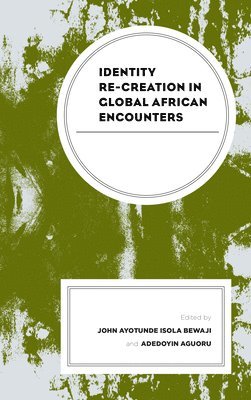
Identity Re-creation in Global African Encounters
John Ayotunde Isola Bewaji, Adedoyin Aguoru
Häftad, 2023
589 kr
Hoppa över listan



Du kanske också är intresserad av
Identity Re-creation in Global African Encounters
John Ayotunde Isola Bewaji, Adedoyin Aguoru
Häftad, 2023
589 kr