
Del i serien Continuum Literary Studies
Romanticism, Literature and Philosophy
Expressive Rationality in Rousseau, Kant, Wollstonecraft and Contemporary Theory
Inbunden, Engelska, 2006
3 129 kr
Beställningsvara. Skickas inom 10-15 vardagar. Fri frakt för medlemmar vid köp för minst 249 kr.
Finns i fler format (1)
Romanticism, Literature and Philosophy proposes a radical revisioning of Romantic literature by developing a new insight into its philosophical importance. It challenges both a number of recent attacks on philosophical reason, and new historicist readings of Romanticism, by arguing that they fundamentally misinterpret what reason is in strikingly similar ways. Engaging with the philosophical, political and literary writings of Rousseau, Kant and Mark Wollstonecraft, and with the deconstruction of Paul de Man and Gayatri Spivak, it suggests that postmodernism's recent assault on Enlightement universalism, and on aesthetic autonomy, in the name of particularity and heterogeneity underestimates the capacity of reason to orient itself towards forms of anthropological and literary defence. Simon Swift is Lecturer in Critical and Culural Theory at the School of English, University of Leeds.
Produktinformation
- Utgivningsdatum2006-06-08
- Mått156 x 234 x 15 mm
- Vikt430 g
- FormatInbunden
- SpråkEngelska
- SerieContinuum Literary Studies
- Antal sidor192
- FörlagBloomsbury Publishing PLC
- ISBN9780826486448
Tillhör följande kategorier
Hoppa över listan
Mer från samma serie
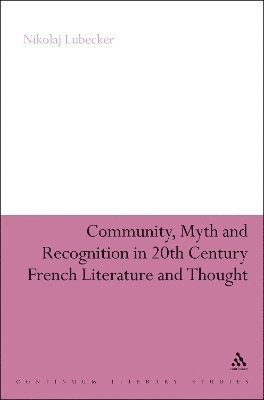
Community, Myth and Recognition in Twentieth-Century French Literature and Thought
Nikolaj Lübecker
Inbunden, 2009
2 919 kr
