
Romantic Readers and Transatlantic Travel
Expeditions and Tours in North America, 1760–1840
Inbunden, Engelska, 2012
4 629 kr
Beställningsvara. Skickas inom 5-8 vardagar. Fri frakt för medlemmar vid köp för minst 249 kr.
Finns i fler format (1)
Why and how did people read literature on North America by explorers, travellers, emigrants, and tourists? This is the central question Robin Jarvis takes up as he addresses a significant gap in scholarship on travel writing: its contemporary reception. Referencing reviews in the periodical press, personal journals, letters, autobiographies, marginalia, and bibliographical evidence relating to the production, distribution, and reception of travel literature, Jarvis focuses especially on the ideas and perceptions of North America expressed by individuals who never visited the subcontinent. Among the issues Jarvis explores are what the British reception of North American travel narratives says about the ways in which the United States was imagined in the Romantic period; how poets such as Samuel Taylor Coleridge, Felicia Hemans, Robert Southey, and William Wordsworth, all voracious travel readers, incorporated their readings of travel books into their works; and the ways in which the reception of North American travel writing should be contextualized within the broader contours of British society and culture. Significantly, Jarvis differentiates between different communities of readers to show the extent to which class or professional status affected the way travel literature was read. Of equally crucial importance, he discusses the reception of travel literature on Canada and the Arctic as distinct from that on the United States. His book constitutes the most thorough exploration to date of the private reading experiences of travel literature during the Romantic period.
Produktinformation
- Utgivningsdatum2012-10-05
- Mått156 x 234 x 14 mm
- Vikt570 g
- FormatInbunden
- SpråkEngelska
- Antal sidor224
- FörlagTaylor & Francis Ltd
- ISBN9780754668602
Tillhör följande kategorier
Hoppa över listan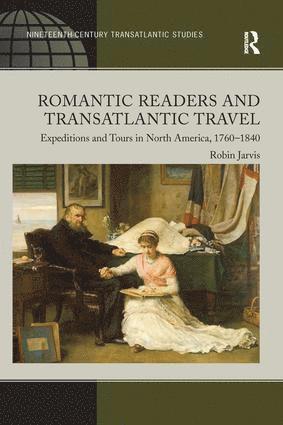






Du kanske också är intresserad av
Staff Educator's Guide to Clinical Orientation, Third Edition
Robin Jarvis, Amy J Word-Allen, Alvin Jeffery
Häftad, 2024
609 kr