
Ricoeur on Time and Narrative
An Introduction to Temps Et Récit
Häftad, Engelska, 2011
409 kr
Beställningsvara. Skickas inom 5-8 vardagar. Fri frakt för medlemmar vid köp för minst 249 kr.
Finns i fler format (1)
"The object of this book," writes William C. Dowling in his preface, "is to make the key concepts of Paul Ricoeur's Time and Narrative available to readers who might have felt bewildered by the twists and turns of its argument." The sources of puzzlement are, he notes, many. For some, it is Ricoeur's famously indirect style of presentation, in which the polarities of argument and exegesis seem so often and so suddenly to have reversed themselves. For others, it is the extraordinary intellectual range of Ricoeur's argument, drawing on traditions as distant from each other as Heideggerian existentialism, French structuralism, and Anglo-American analytic philosophy. Yet beneath the labyrinthian surface of Ricoeur's Temps et récit, Dowling reveals a single extended argument that, though developed unsystematically, is meant to be understood in systematic terms. Ricoeur on Time and Narrative presents that argument in clear and concise terms, in a way that will be enlightening both to readers new to Ricoeur and those who may have felt themselves adrift in the complexities of Temps et récit, Ricoeur's last major philosophical work. Dowling divides his discussion into six chapters, all closely involved with specific arguments in Temps et récit: on mimesis, time, narrativity, semantics of action, poetics of history, and poetics of fiction. Additionally, Dowling provides a preface that lays out the French intellectual context of Ricoeur's philosophical method. An appendix presents his English translation of a personal interview in which Ricoeur, having completed Time and Narrative, looks back over his long career as an internationally renowned philosopher. Ricoeur on Time and Narrative communicates to readers the intellectual excitement of following Ricoeur's dismantling of established theories and arguments—Aristotle and Augustine and Husserl on time, Frye and Greimas on narrative structure, Arthur Danto and Louis O. Mink on the nature of historical explanation—while coming to see how, under the pressure of Ricoeur's analysis, these ideas are reconstituted and revealed in a new set of relations to one another.
Produktinformation
- Utgivningsdatum2011-10-30
- Mått152 x 229 x 10 mm
- Vikt227 g
- FormatHäftad
- SpråkEngelska
- Antal sidor136
- FörlagUniversity of Notre Dame Press
- ISBN9780268026080
Tillhör följande kategorier
Hoppa över listan

Mer från samma författare
Essay on the Life of the Honourable Major-General Israel Putnam
David Humphreys, William C. Dowling, William C Dowling
Inbunden, 2000
329 kr
Essay on the Life of the Honourable Major-General Israel Putnam
David Humphreys, William C. Dowling, William C Dowling
Häftad, 2000
169 kr
Hoppa över listan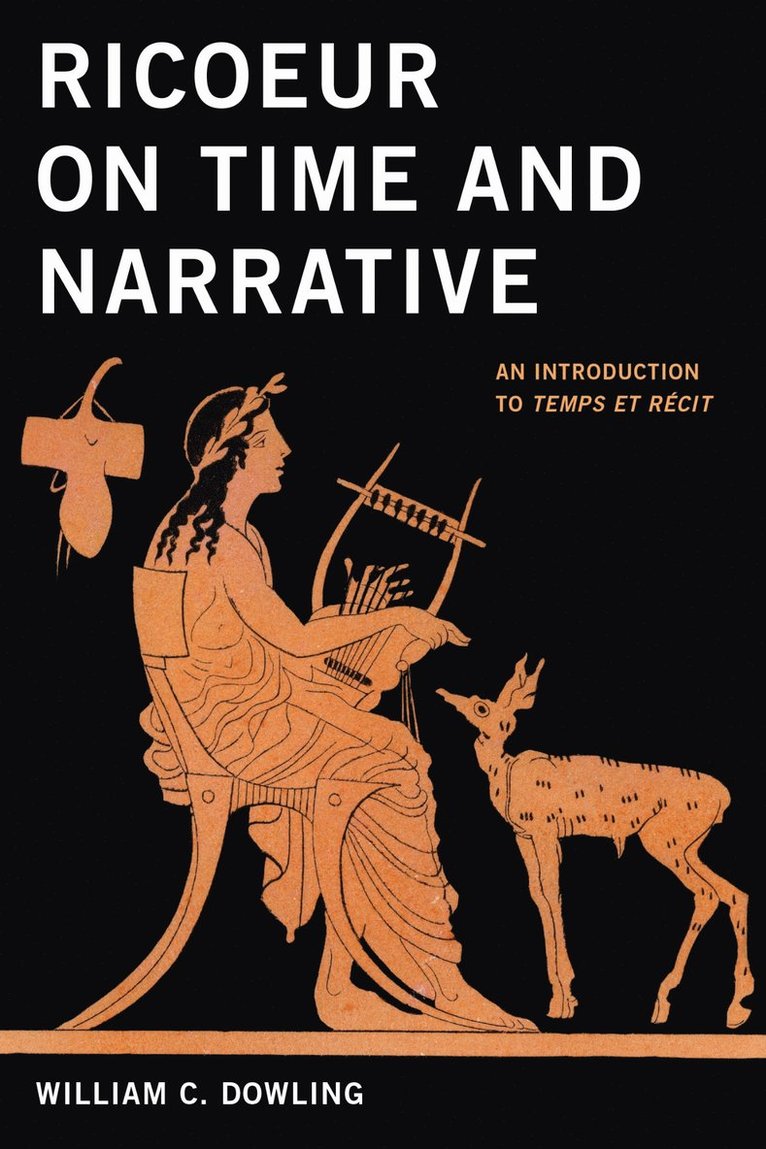
Du kanske också är intresserad av
Essay on the Life of the Honourable Major-General Israel Putnam
David Humphreys, William C. Dowling, William C Dowling
Inbunden, 2000
329 kr
Essay on the Life of the Honourable Major-General Israel Putnam
David Humphreys, William C. Dowling, William C Dowling
Häftad, 2000
169 kr