
Del i serien Elements in Chinese Economy and Governance
Rethinking Political Meritocracy
An Attention-Based Approach
Inbunden, Engelska, 2026
1 159 kr
Beställningsvara. Skickas inom 5-8 vardagar. Fri frakt för medlemmar vid köp för minst 249 kr.
Finns i fler format (1)
Political meritocracy, which selects and promotes officials based on their work performance, is an important explanation for China's rapid development. While prior studies focus on territorial leaders (kuai), less attention is given to functional department leaders (tiao), whose performance is harder to measure, attribute, or compare. This Element introduces an attention-based explanation, arguing that in China's complex bureaucratic system, marked by intricate divisions of labor and information asymmetry, capturing superiors' attention is critical for official's career advancement. Through case studies and analyses of original biographical data on functional department leaders, this Element reveals: 1) Promotion likelihood correlates with officials' ability to gain superiors' attention; 2) Not all attention-seeking behaviors align with governance goals, often fostering bureaucratic issues like formalism and over-implementation. This attention-based framework tries to reconcile debates on competence versus connections in Chinese political selection and explains both the bureaucratic system's successes and its governance challenges.
Produktinformation
- Utgivningsdatum2026-07-23
- Mått152 x 229 x 6 mm
- Vikt281 g
- FormatInbunden
- SpråkEngelska
- SerieElements in Chinese Economy and Governance
- Antal sidor98
- FörlagCambridge University Press
- ISBN9781009502672
Tillhör följande kategorier
Hoppa över listan







Mer från samma författare
Monitoring and Early Warning Technologies on Karst Lands
Xiaozhen Jiang, Mingtang Lei, Wanfang Zhou, Fubiao Zhou, Xiao Ma, Jianling Dai, Zongyuan Pan
Inbunden, 2024
1 859 kr
Monitoring and Early Warning Technologies on Karst Lands
Xiaozhen Jiang, Mingtang Lei, Wanfang Zhou, Fubiao Zhou, Xiao Ma, Jianling Dai, Zongyuan Pan
Häftad, 2025
1 859 kr
Del 11
5G Edge Computing
Xiao Ma, Mengwei Xu, Qing Li, Yuanzhe Li, Ao Zhou, Shangguang Wang
Inbunden, 2024
2 359 kr
5G Edge Computing
Xiao Ma, Mengwei Xu, Qing Li, Yuanzhe Li, Ao Zhou, Shangguang Wang
Häftad, 2025
2 359 kr
Hoppa över listan






Mer från samma serie
Elite Conflicts and the Path to Economic Decentralization
Dong Zhang, Mingxing Liu, Victor Shih
Häftad, 2025
389 kr
Elite Conflicts and the Path to Economic Decentralization
Dong Zhang, Mingxing Liu, Victor Shih
Inbunden, 2025
1 159 kr
Hoppa över listan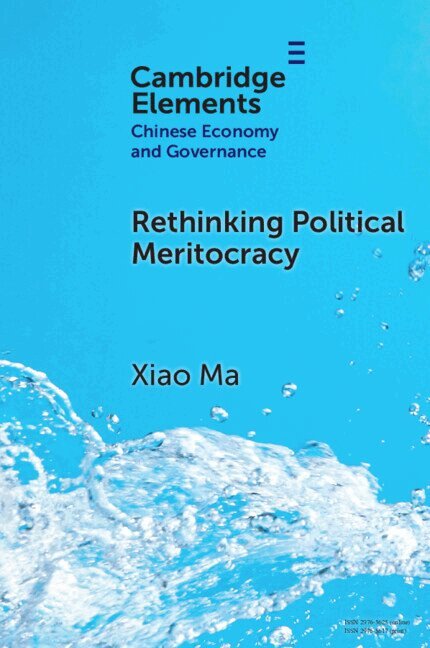
Du kanske också är intresserad av
Monitoring and Early Warning Technologies on Karst Lands
Xiaozhen Jiang, Mingtang Lei, Wanfang Zhou, Fubiao Zhou, Xiao Ma, Jianling Dai, Zongyuan Pan
Inbunden, 2024
1 859 kr
5G Edge Computing
Xiao Ma, Mengwei Xu, Qing Li, Yuanzhe Li, Ao Zhou, Shangguang Wang
Häftad, 2025
2 359 kr
Monitoring and Early Warning Technologies on Karst Lands
Xiaozhen Jiang, Mingtang Lei, Wanfang Zhou, Fubiao Zhou, Xiao Ma, Jianling Dai, Zongyuan Pan
Häftad, 2025
1 859 kr
Del 11
5G Edge Computing
Xiao Ma, Mengwei Xu, Qing Li, Yuanzhe Li, Ao Zhou, Shangguang Wang
Inbunden, 2024
2 359 kr