
Resources of Critique
Häftad, Engelska, 2006
439 kr
Beställningsvara. Skickas inom 5-8 vardagar. Fri frakt för medlemmar vid köp för minst 249 kr.
Finns i fler format (1)
Social criticism has enjoyed a renaissance in the past few years. The anti-globalization protests at Seattle and Genoa and the great marches against the war in Iraq have put contestation of capitalism and imperialism back on the political and intellectual agenda. But how does social critique situate itself philosophically today, after the marginalization of Marxism and the impact of postmodernism? In The Resources of Critique, Alex Callinicos seeks to address this question systematically. He does so, in the first part, by surveying some of the most influential contemporary critical theorists Alain Badiou, Jacques Bidet, Luc Boltanski, Pierre Bourdieu, Eve Chiapello, Jürgen Habermas, Antonio Negri and Slavoj Žižek. The limitations of all these theorists perspectives prompts Callinicos in the second part of the book to outline an alternative approach whose main elements are a critical realist ontology, a Marxist theory of social contradiction, and an egalitarian conception of justice. The main thrust of his argument is to show that Marx's critique of political economy remains inescapable for anyone seeking to challenge the existing world order but only if it maintains an open but rigorous dialogue with other critical perspectives. The Resources of Critique is, above all, a contribution to this dialogue.
Produktinformation
- Utgivningsdatum2006-02-20
- Mått150 x 228 x 20 mm
- Vikt480 g
- FormatHäftad
- SpråkEngelska
- Antal sidor328
- FörlagJohn Wiley and Sons Ltd
- ISBN9780745631615
Tillhör följande kategorier
Hoppa över listan
Mer från samma författare
Routledge Handbook of Marxism and Post-Marxism
Alex Callinicos, Stathis Kouvelakis, Lucia Pradella
Häftad, 2022
979 kr
Del 7
Hoppa över listan

Du kanske också är intresserad av
Routledge Handbook of Marxism and Post-Marxism
Alex Callinicos, Stathis Kouvelakis, Lucia Pradella
Inbunden, 2020
4 849 kr
Del 7
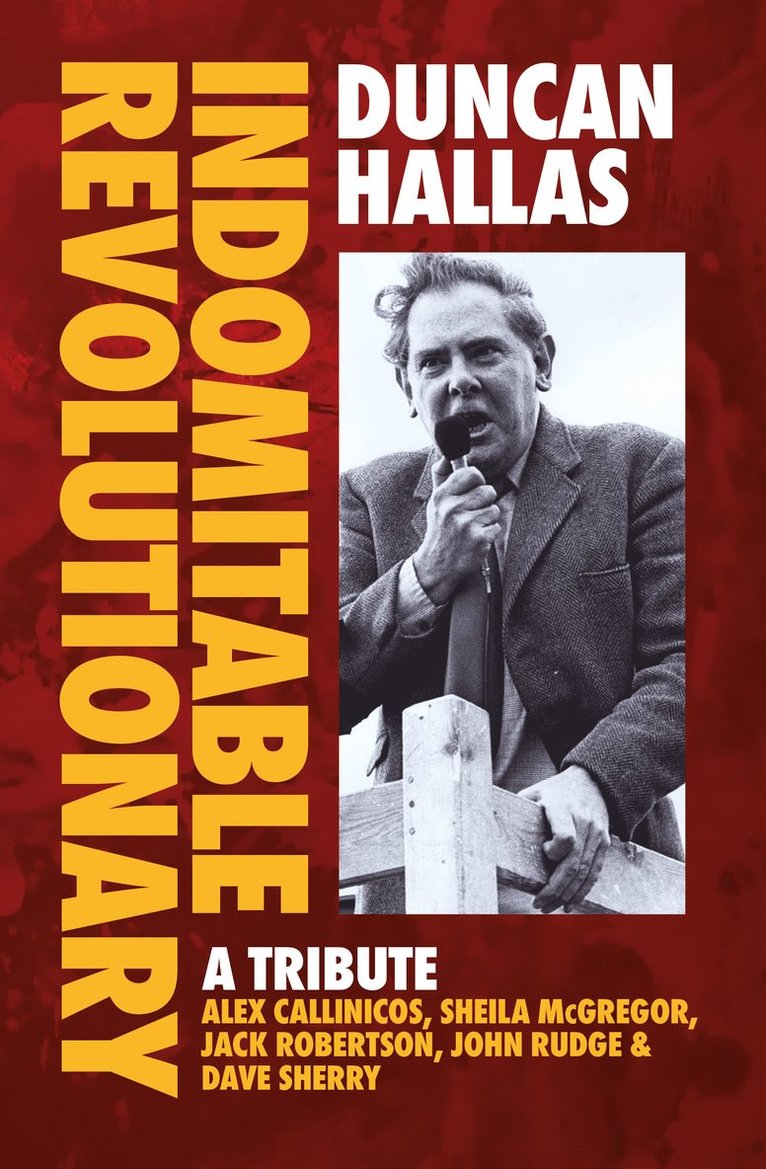
Duncan Hallas: Indomitable Revolutionary
Duncan Hallas, Alex Callinicos, Sheila McGregor
Häftad, 2023
189 kr