Beställningsvara. Skickas inom 7-10 vardagar. Fri frakt för medlemmar vid köp för minst 249 kr.
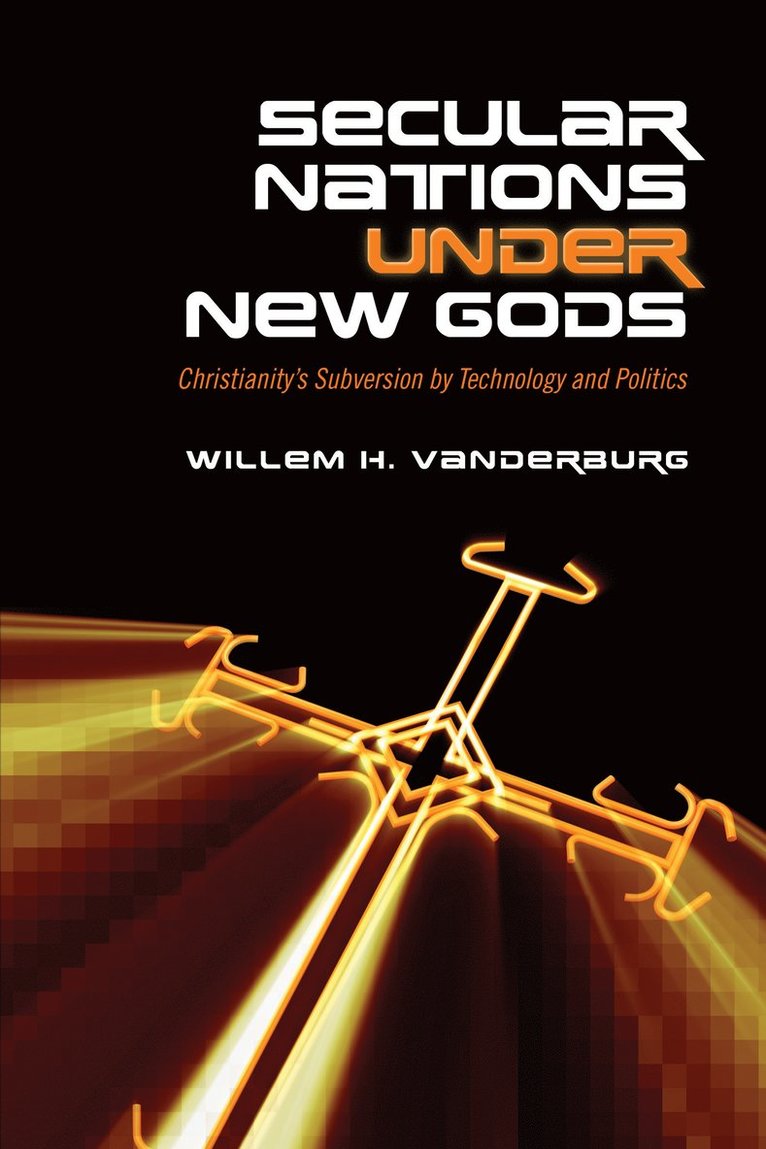
In Rescuing Humanity, Willem H. Vanderburg reminds us that we have relied on discipline-based approaches for human knowing, doing, and organizing for less than a century. During this brief period, these approaches have become responsible for both our spectacular successes and most of our social and environmental crises. At their roots is a cultural mutation that includes secular religious attitudes that veil the limits of these approaches, leading to their overvaluation. Because their use, especially in science and technology, is primarily built up with mathematics, living entities and systems can be dealt with only as if their "architecture" or "design" is based on the principle of non-contradiction, which is true only for non-living entities. This distortion explains our many crises.Vanderburg begins to explore the limits of discipline-based approaches, which guides the way toward developing complementary ones capable of transcending these limits. It is no different from a carpenter going beyond the limits of his hammer by reaching for other tools. As we grapple with everything from the impacts of social media, the ongoing climate crisis, and divisive political ideologies, Rescuing Humanity reveals that our civilization must learn to do the equivalent if humans and other living things are to continue making earth a home.
Willem H. Vanderburg has taught preventive engineering, sociology, and environmental studies at the Centre for Technology and Social Development at the University of Toronto.
PrefaceIntroductionSuspended in Language and CultureAttempts at Escaping Our Suspension in Language and CultureFoundationalism and the Architecture of Non-LifeThe Technical Division of Labour and the Architecture of Non-LifeTechnique and the Architecture of Non-LifeTechnique, the State, and the LawGrowing Up and Living with Technique1. Our Physical Embodiment within the Relativity of Life and the WorldCan We Escape Our Embodiment?The Great Cultural Divide in the Relativity of Human LifeThe Relativity of Our Lives before Screen-Based DevicesThe General Relativity of Human Life and the World before Screen-based Devices2. Our Social and Cultural Embodiment in the Relativity of Human Life in the WorldA Hidden DiscontinuityThe Artificiality of a CultureScreens as Magic PortalsGrowing Up with Symbolization and DesymbolizationTwo Streams of ExperiencesLanguage Acquisition in Anti-Societies with Three Frames of Reference3. Living with a Dual Relativity beyond Cultural EmbodimentA General Interpretation of Our Dual RelativityLiving and Constructed EntitiesThe Emergence of Cultural Mediation in a General RelativityFrom Cultural to Technical MediationThe Economy, Art, and the Order of Non-SenseMaking Sense of Non-Sense4. Mathematics as the Non-Language of Science and TechniqueMathematical Foundations and TruthsThe Emergence of a Secular Religious Daily-Life WorldScience and MathematicsDisciplines, Games, and the General Relativity of Human LifeMathematics as a DisciplineMathematics, Languages, and GamesMathematics and TimeMathematics and Daily LifeMathematics and EducationIs Mathematics the Secular Religion of Technique?5. Human Knowing and Discipline-Based ScienceIs Our Science Unlike All Others?Disciplines and Daily-Life KnowingThe Known and the UnknownCulture and Discipline-Based ScienceScience, Reality, and Our Life-MilieuPhysics as a Mathematical Game?Our Metaphors for Space, Time, Matter, and NumbersScience, Religion, and Christianity6. Human Doing, Technique, and the Living of Our LivesNaming What We Have LostRecognizing the Symptoms of What We Have LostAbsolute and Relative EfficiencyEconomics as TechniqueOur Daily Lives and the Professions of TechniqueTechnique and Non-LifeTechnique as Response to Relativism, Nihilism, and AnomieEpilogue: Possessed by Secular MythsEndangered by Secular Religious AttitudesIs Humanity Truly against Enslavement?NotesIndex