
Remaking Community?
New Labour and the Governance of Poor Neighbourhoods
Inbunden, Engelska, 2010
1 949 kr
Beställningsvara. Skickas inom 10-15 vardagar. Fri frakt för medlemmar vid köp för minst 249 kr.
Finns i fler format (1)
New Labour deployed community as a conceptual framework to rearticulate the state / citizen relationship to be enacted at and through new spaces of governance. An important example of this was how successive New Labour governments sought to renovate the social, political and economic cultures of poor neighbourhoods and generate trajectories of strong, empowered and ordered civic space. This was pursued through programmes such as the New Deal for Communities (NDC) that sought to invigorate and embed socially excluded citizens within localised regeneration projects. In attempting to construct community as a space through which personal and spatial renewal could be achieved, New Labour relied on problematic assumptions about the nature, scope and meaning of community and its relationship with individual social agents. Drawing on original research conducted in an NDC neighbourhood, Remaking Community addresses the interlinking uses of community in government rhetoric and practice. It explores why this concept was so central to the New Labour governing project and what it meant for individuals enveloped in the 'regeneration' of their citizenship and locality. It seeks to understand how community is conceptualised, applied, constructed, misunderstood, exploited, experienced, contested, mobilised and activated by both policy actors and neighbourhood residents and situates this discussion within an examination of the political, emotional and cultural impact of the regeneration experience. Offering a timely analysis of New Labour, regeneration and the politics of community, this book makes an original and important contribution to debates around new spaces of governance, citizen participation and the tackling social exclusion in poor neighbourhoods.
Produktinformation
- Utgivningsdatum2010-10-15
- Mått156 x 234 x 14 mm
- Vikt453 g
- FormatInbunden
- SpråkEngelska
- Antal sidor170
- FörlagTaylor & Francis Ltd
- ISBN9780754678540
Tillhör följande kategorier
Hoppa över listan





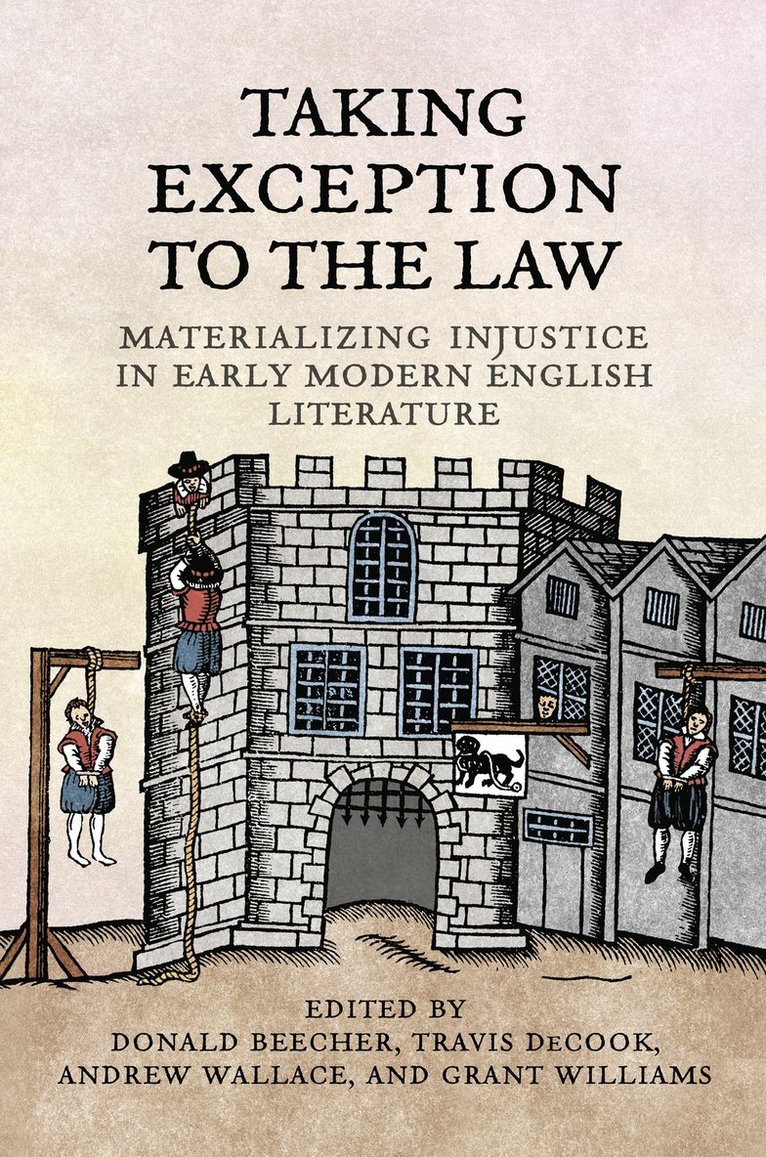

Mer från samma författare
Popular Traditions of Glasgow: Historical, Legendary and Biographical.
Andrew Wallace
Häftad, 2011
359 kr
A Popular Sketch of the History of Glasgow from the Earliest to the Present Time.
Andrew Wallace
Häftad, 2011
339 kr
Taking Exception to the Law
Don Beecher, Travis DeCook, Andrew Wallace, Grant Williams
Inbunden, 2015
1 119 kr
Hoppa över listan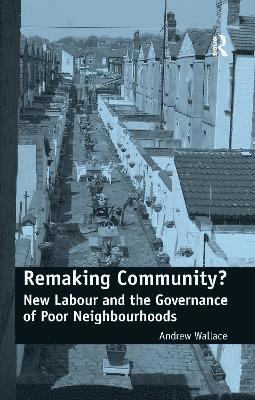



Du kanske också är intresserad av
- Nyhet
A Popular Sketch of the History of Glasgow from the Earliest to the Present Time.
Andrew Wallace
Häftad, 2011
339 kr