
Regulatory Governance in Developing Countries
Häftad, Engelska, 2007
1 219 kr
Beställningsvara. Skickas inom 5-8 vardagar. Fri frakt för medlemmar vid köp för minst 249 kr.
Finns i fler format (1)
The past decade has seen a quickening of the pace and extent of privatisation reforms in developing countries. An associated set of post-privatisation policies has seen the introduction of new and changed regulatory institutions. This book critically reviews regulatory reforms in developing countries, with a particulalr focus on the strengths and weaknesses of the 'best practice' model of reform, the significance of institutions of regulatory governance, and the impact of post-privatisation governance on development and poverty reduction agendas. The contributors argue that while regulatory governance is regarded as highly significant in the literature on economic and social regulation in developed economies, in relation to regulatory reforms in developing countries, it is a neglected and under researched field. This book redresses the balance. Regulatory Governance in Developing Countries proposes that existing policy models of regulatory reform are inappropriate, ineffectual, and too narrowly conceived; they need to be evaluated and reshaped within the broader context of poverty reduction and developmental programmes. Drawn from diverse backgrounds, including law, political science, economics, and development policy and management, the contributors are well placed to judge issues of policy transfer between developed and developing systems of governance. Postgraduate and advanced undergraduate students in governance, public policy, public sector development studies and economics will find this book to be of great interest as will practitioners in development agencies and aid institutions.
Produktinformation
- Utgivningsdatum2007-11-27
- Mått156 x 234 x undefined mm
- FormatHäftad
- SpråkEngelska
- SerieThe CRC Series on Competition, Regulation and Development
- FörlagEdward Elgar Publishing Ltd
- ISBN9781847206213
Tillhör följande kategorier
Hoppa över listan








Mer från samma författare
Documents on Contemporary British Government: Volume 2, Local Government in Britain
Martin Minogue, Martin Minogue
Häftad, 1977
989 kr
Documents on Contemporary British Government: Volume 1, British government and constitutional change
Minogue, Martin Minogue
Häftad, 1977
709 kr
Leading Issues in Competition, Regulation and Development
Paul Cook, Colin Kirkpatrick, Martin Minogue, David Parker
Inbunden, 2004
3 619 kr
Hoppa över listan

Mer från samma serie
Leading Issues in Competition, Regulation and Development
Paul Cook, Colin Kirkpatrick, Martin Minogue, David Parker
Inbunden, 2004
3 619 kr
Leading Issues in Competition, Regulation and Development
Paul Cook, Colin Kirkpatrick, Martin Minogue, David Parker
Häftad, 2005
1 219 kr
Competitive Advantage and Competition Policy in Developing Countries
Paul Cook, Raul Fabella, Cassey Lee
Inbunden, 2007
3 389 kr
Hoppa över listan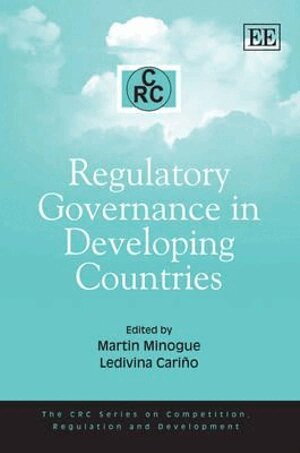

Du kanske också är intresserad av
Leading Issues in Competition, Regulation and Development
Paul Cook, Colin Kirkpatrick, Martin Minogue, David Parker
Häftad, 2005
1 219 kr
Documents on Contemporary British Government: Volume 1, British government and constitutional change
Minogue, Martin Minogue
Häftad, 1977
709 kr
Documents on Contemporary British Government: Volume 2, Local Government in Britain
Martin Minogue, Martin Minogue
Häftad, 1977
989 kr
Leading Issues in Competition, Regulation and Development
Paul Cook, Colin Kirkpatrick, Martin Minogue, David Parker
Inbunden, 2004
3 619 kr